

Arlington high school crew teams and owners of fishing and boating charters are stuck on the shoreline this spring as DC Water crews continue to repair an underground sewer line that ruptured Jan. 19, spilling more than 240 million gallons of raw sewage and wastewater into the Potomac River—one of the largest spills in U.S. history.
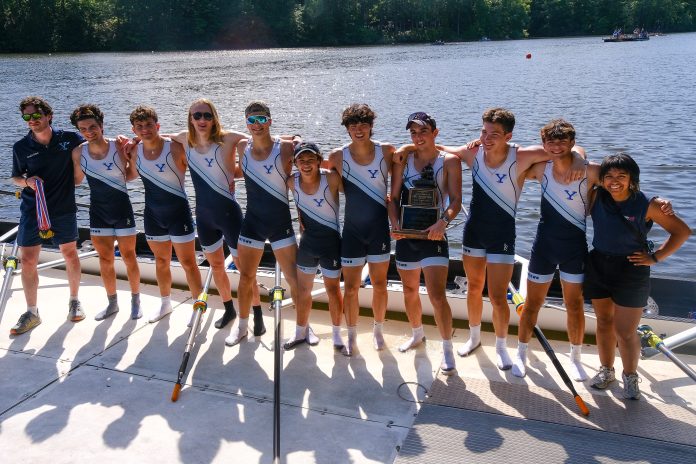
Arlington Public Schools has decided to keep crew teams from Yorktown, Wakefield and Washington-Liberty high schools out of the water until they get the “all-clear” from the Virginia Department of Health.
“We’re obviously frustrated. The kids have been training really hard all winter. They’re anxious to get on the water,” says Jane Totten, president of the Yorktown Crew Boosters. “We have kids who’ve been doing this since their eighth-grade year, and they’re really excited to close out their high school rowing career on a really high note. We also have brand new rowers who have never been on the water. We need every day to teach them so they’re ready to race.”
The Virginia Department of Health’s recreational water advisory for Virginia residents is still in place. The Virginia Department of Environmental Quality is conducting regular water testing.
DC Health, however, has already announced it will lift the advisory against recreational contact with the Potomac River. Starting March 2, residents can boat and fish along the shoreline of the D.C. section of the river. The government agency says testing data shows e. coli levels have dropped since the January collapse of a 60-year-old pipe in Montgomery County, Maryland. Drinking water was not affected by the incident.
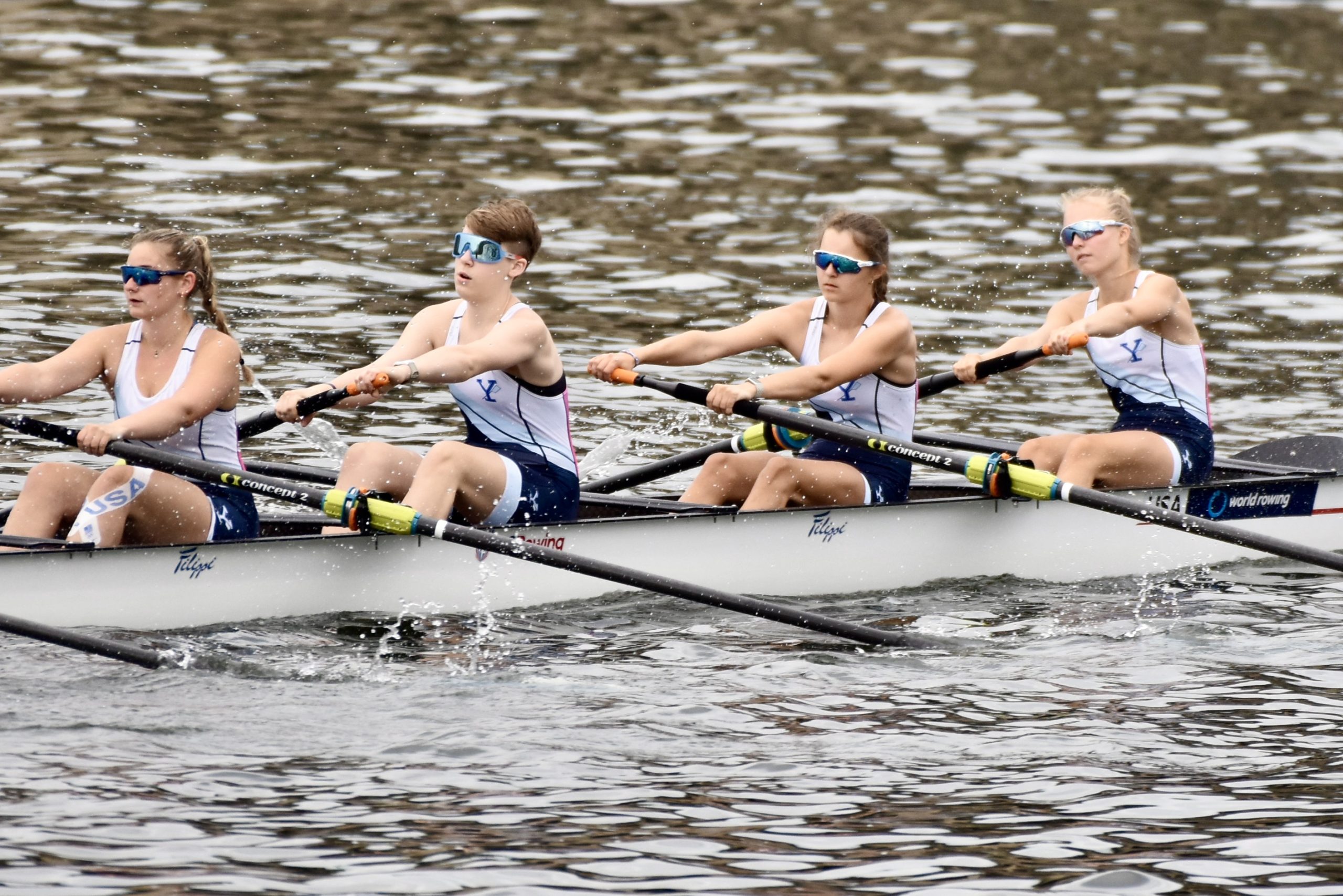
Arlington high school crew teams train throughout the winter on ergometers indoors. Yorktown students were scheduled to begin training on the Potomac Feb. 24. The Yorktown team practices six days a week for about 13 weeks, mostly launching out of Thompson Boat Center south of Georgetown, which is temporarily closed because of the spill.
Yorktown head coach and program director Tolsun Waddle says he’s hopeful they can still get out on the water. But even the loss of two weeks of training will take a toll on the team. “That’s 15% of the season just gone. It’s hard to keep morale up, to keep people interested and engaged,” Waddle says.
Arlington County schools do not have fall crew, so spring is the only chance to practice their sport. Wakefield’s crew team, which practices on the Anacostia River, has also been shorelined for the start of the season out of an abundance of caution.
“It’s hard for me to stay motivated and optimistic,” says Wakefield junior, Camila Seekford. “It’s difficult not knowing when we will be able to return back on water. That uncertainty makes training on land harder and harder with each day that goes by.”
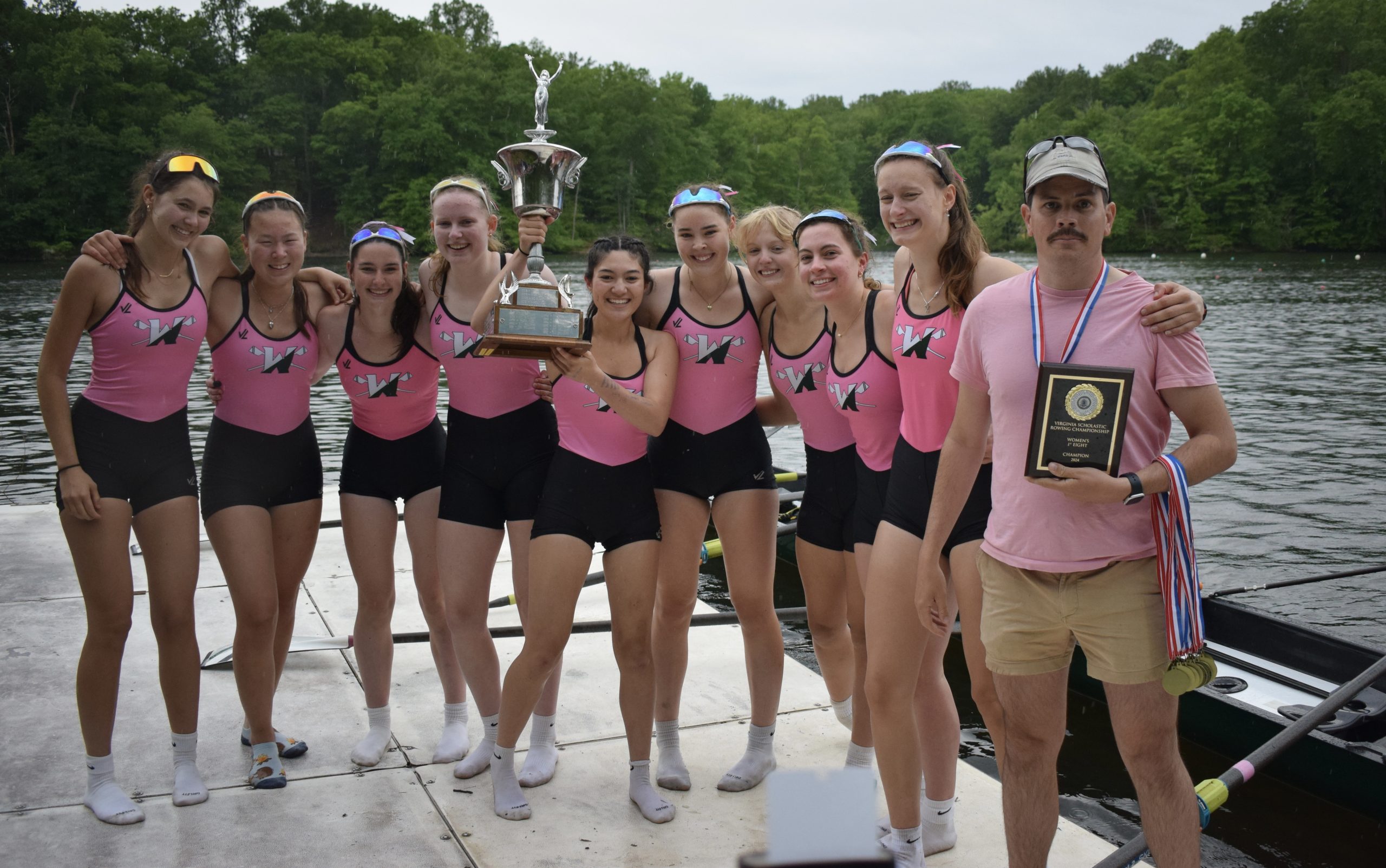
“The spring season is kind of like the light at the end of that tunnel of all of that boring land training. The joy of the sport is found on the water and missing that is kind of horrible,” says Sarah Vest, coach of the Wakefield girls varsity team, which has won the state championship for the past five years.
Vest says she’s optimistic the team will win again this year, despite the delay. “Rowers are inherently resilient. You have to be resilient to take up this sport. They’re pretty used to having to adapt to change quickly, because that’s just the nature of rowing in an outdoor sport where anything can happen. So they’re rolling with it as best they can,” Vest says.
Meanwhile, the owners of recreational fishing companies in Arlington say they are watching the testing reports closely as they approach the start of their busy season.
“We’re not entirely sure what to expect. I will say that it’s affecting our customers’ state of mind and their perception of whether there’s going to be a fishery. A lot of folks have been very pessimistic about it,” says Richard Farino, owner of District Angling in Cherrydale.
Farino, who also leads guided fly-fishing trips, says customers are spending less than usual on fishing supplies, and he’s scaling back on making flies for fishhooks as a result. March typically marks the beginning of fly-fishing season, beginning with shad. It’s an iconic and highly anticipated spring rite for local anglers.
“It’s celebrated. It is a social sport,” he says. “You get people from all over the country come up here to fish it…people from all sorts of life and class and jobs all over D.C., from Supreme Court justices to blue collar plumbers and truckers and folks who just are retired.”
Owen Koch, owner of Capital Blues Fishing Charters, a sustainable outfitter specializing in fishing for invasive catfish, says he’s had to postpone or cancel about five trips so far, due to elevated bacteria levels in the water.

He says he’s watching water testing reports closely as his busy season approaches. At the height of the season, he leads about ten fishing excursions per week. Koch says he’s optimistic he’ll be able to get out on the water this spring.
“I use fish grips and gloves anyway, to protect myself and the clients, and just an abundance of caution and some common sense,” Koch says. “Let the spring rains and the tides flush a lot of this out. The river does have a large absorptive quality or property to it. While this spill was probably unprecedented in terms of its size, it’s not going to be the doom and gloom scenario that seems to be circulating.”
Raw sewage spilled into the Potomac for days before a temporary diversion contained the spill. A permanent fix will take more than a month and cost about $20 million dollars, according to David Gadis, CEO of DC Water.