
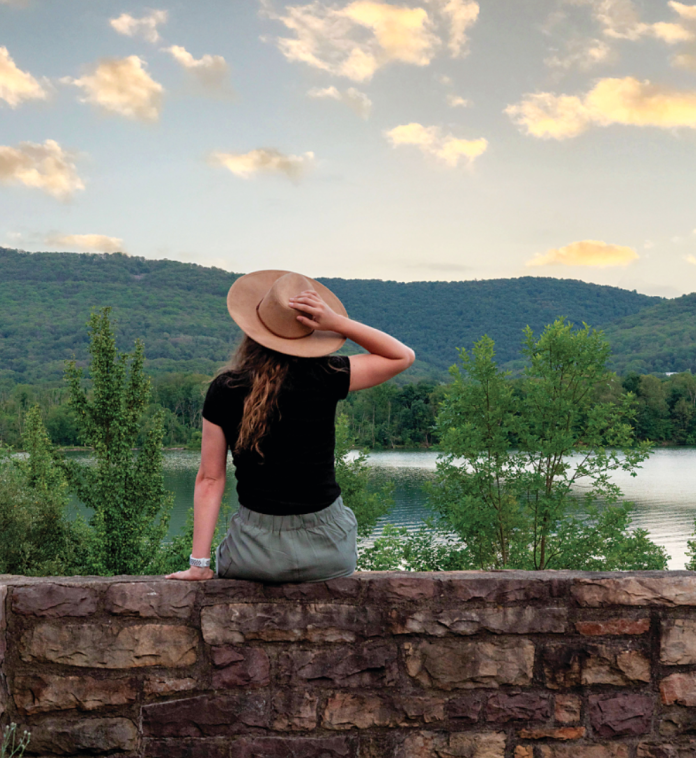

It’s 6:30 on a June morning, and the meadow beneath my eco-lodge balcony is abuzz with chirps, twills, warbles and tweets. The sun’s barely up, but I can already see boats heading out on picturesque F.J. Sayers Lake as the mist rises from its placid surface. Seems I’m not the only early bird at The Nature Inn at Bald Eagle, tucked inside Pennsylvania’s Bald Eagle State Park.
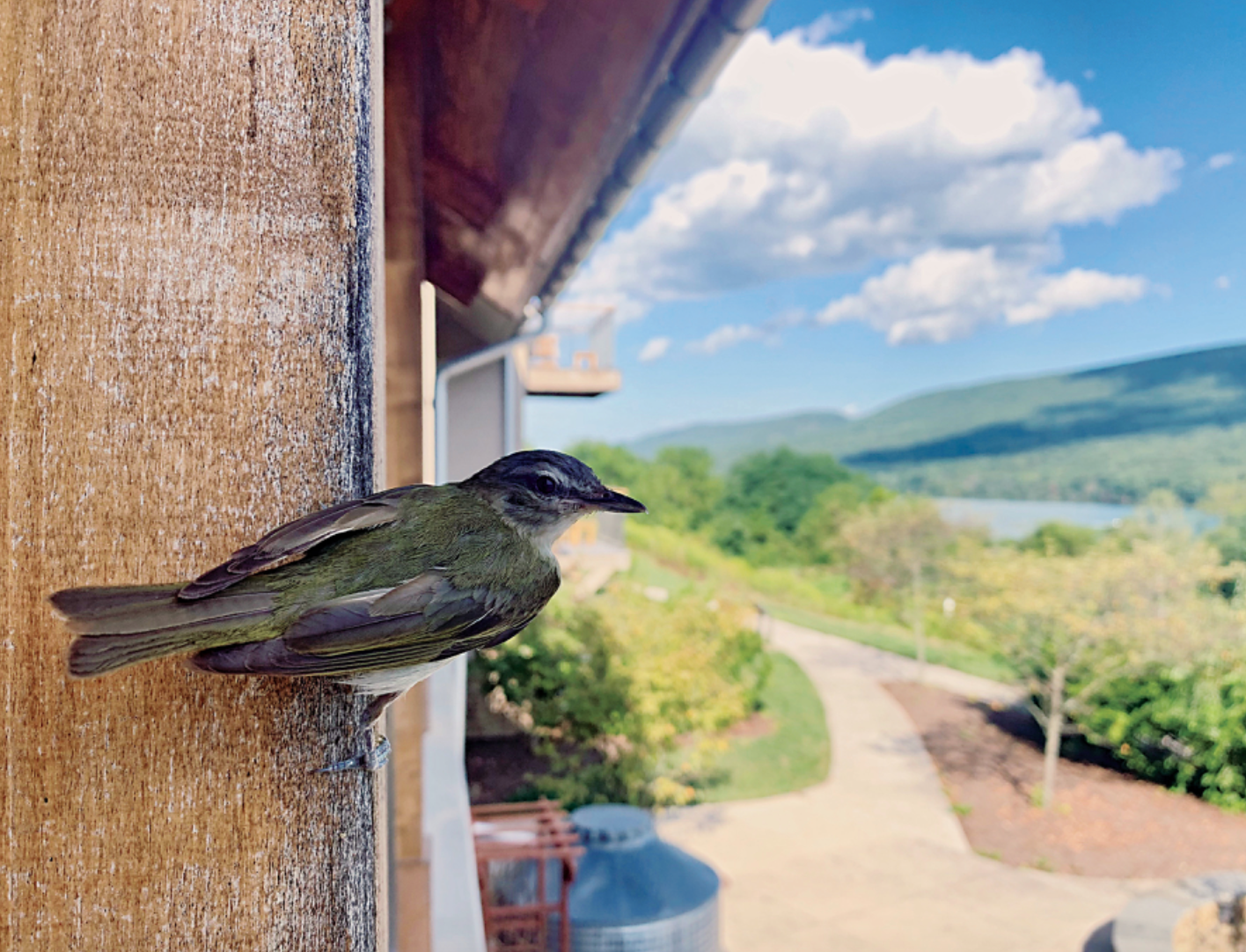
From my perch, I note the presence of at least 14 distinct bird species—including indigo bunting, yellow warbler, American redstart, barn swallow, common yellowthroat and red-eyed vireo—identifying their calls with my trusty Merlin app. A flutter of bright yellow is likely a goldfinch, but I’m hoping to catch a glimpse of a warbler or bunting. As an amateur birder, I don’t have the drive to keep a “life list” of all the winged creatures I’ve seen, but I do enjoy a good game of hide-and-seek.
My visit to this north central stretch of the Keystone State, known as the “Pennsylvania Wilds,” has been a long time coming. A former logging area, it’s now a 13-county conservation landscape peppered with small towns and comprising more than 2 million public acres of lakes, rivers, mountains, forests, wetlands and meadows. Though the Wilds make up 25% of Pennsylvania’s land area, only 4% of the state’s human population lives here. Instead, the local celebrities include elk, white-tailed deer, bobcats, foxes, black bears, beavers and, of course, birds. It’s a naturalist’s paradise.
So much of birding is a matter of luck. A bird’s mission, after all, is to stay camouflaged from predators. Yet, as I hike the inn’s mostly flat, 2.1-mile Loop Trail, I chastise myself for not being quicker to identify the darting and flitting avian creatures in my peripheral vision.
From high in the branches, I recognize the call of a wood thrush. The sound is bittersweet. For years, I heard that same melodious song in the thin band of Arlington’s Zachary Taylor Park, where I volunteer as a park steward, but it’s been absent the last two. I worry the habitat has degraded, despite volunteer efforts to support its biodiversity with native plantings, invasive plant removal and other forms of habitat restoration.
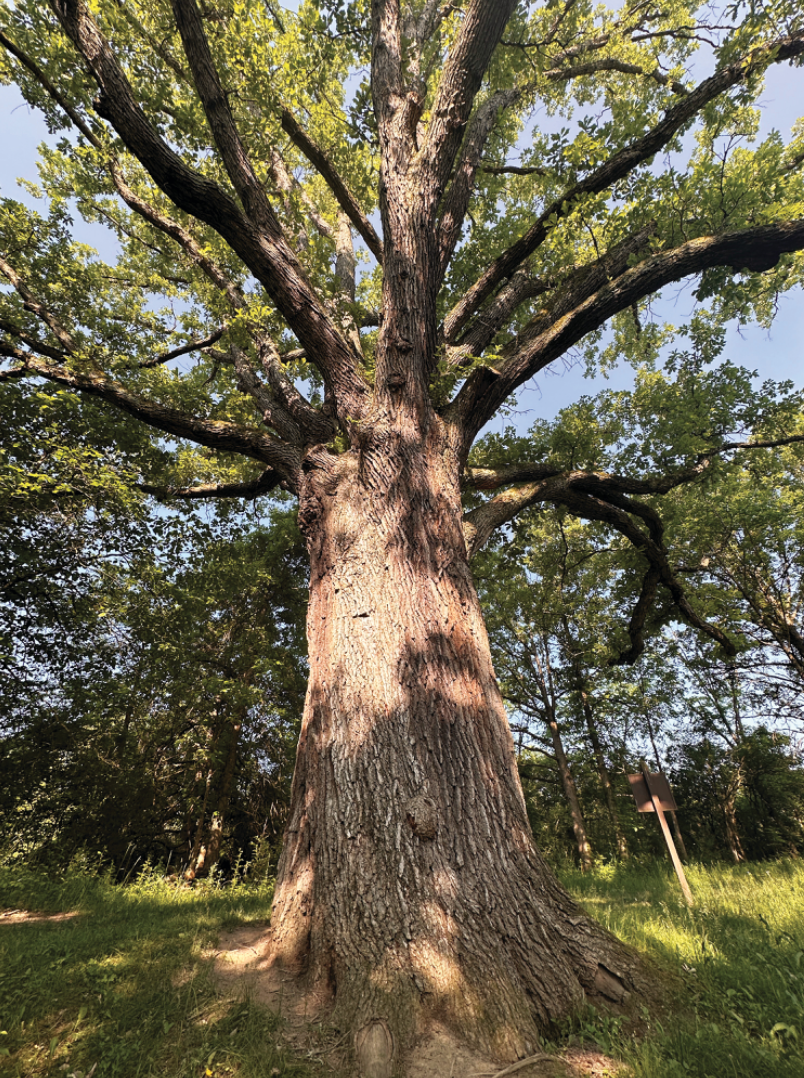
Returning my focus to the terrain in front of me, I study the trees. A waiter at breakfast shared that the Loop Trail leads to a 350-year-old swamp white oak, and I’m on the lookout for this impressive specimen. For a moment, I believe I’ve found it—until I spy another whose trunk is nearly twice the diameter of the first, and take a seat on a nearby bench. The gnarled base of this old soul is twisted from centuries of persistence. (Its trunk measured more than 18 feet around when it was designated a state Champion Tree in 2016.) I sit in silence, almost expecting it to speak to me in a Tolkienesque way. Though it has some dead branches, its crown fills the sky overhead. The underground root system may be twice as vast.
Emerging from the woods after having helpfully pulled a few invasive plants (Illegal? I really don’t care), I head toward the resort’s Butterfly Trail. Birds pop up from the meadow grasses, flapping rapidly and descending back into the vegetation before I can get my binoculars up. Merlin identifies some by their song, but I want to see them.
A noisy red-winged blackbird swoops above, and I duck. Clearly, I’m too close to its nest and it’s agitated, so I scurry along. Lining the path ahead are at least half a dozen bluebird boxes. A bright male is perched atop one, keeping vigil.
Near a wet area, I smile at the twangy mating call of a green frog. Despite the name of the trail, there are no butterflies to be seen, only grayish moths springing up from my footsteps to alight on higher ground. Amid the late-spring greenery, I recognize milkweed and other host plants for insects that haven’t yet bloomed in this cooler clime. I’m a smidge too early for butterfly season, and there’s no nectar yet. The flora and fauna will be different in another week or two.
Continuing on, I pass a human-constructed habitat of hollow, hanging gourds meant for cavity-nesting birds such as bluebirds and purple martins. Guarding this complex, a lone tree swallow eyes me suspiciously.
A Merlin alert indicates the presence of cedar waxwings, which travel en masse, and I sweep my binoculars toward their whistles and high-pitched cries. Bingo! There before my eyes are at least a dozen of them, with their distinctive yellow tail bands. (Fun fact: The occasional red markings on the tips of their secondary wings resemble sealing wax, hence their name.) I give myself a virtual high-five.
Later, looping back into woods, I hear the staccato cries of an indigo bunting in a pine tree, but I can’t spot it to save my life. A moment later, a hollow stuttering in the treetops turns out to be a yellow-billed cuckoo. I’m thrilled to have caught a mere glimpse of its shadow. If you only hear a bird but don’t quite see it, does that count as a checkmark on your birding list?
Eat, Drink, Stay, Play
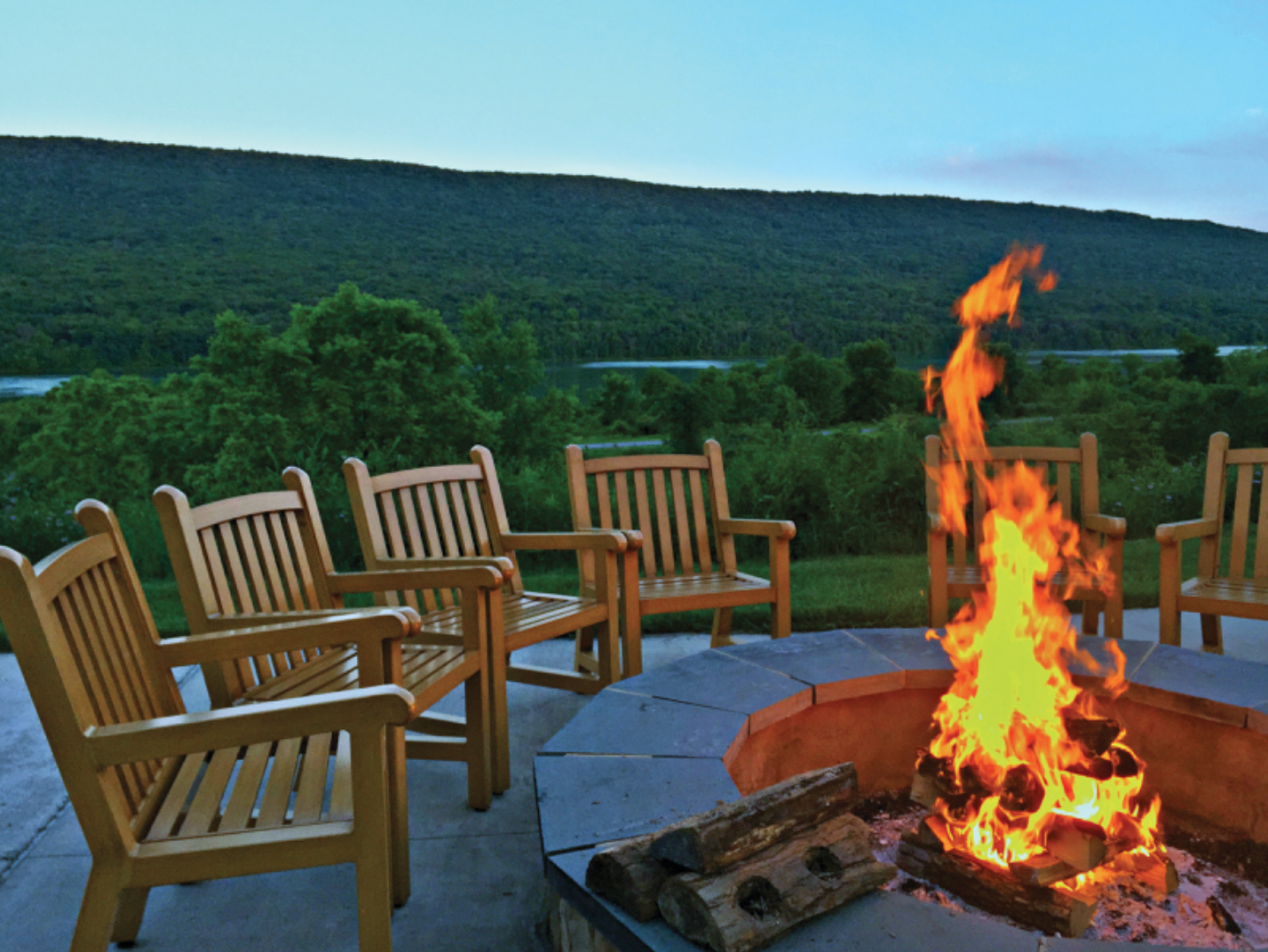
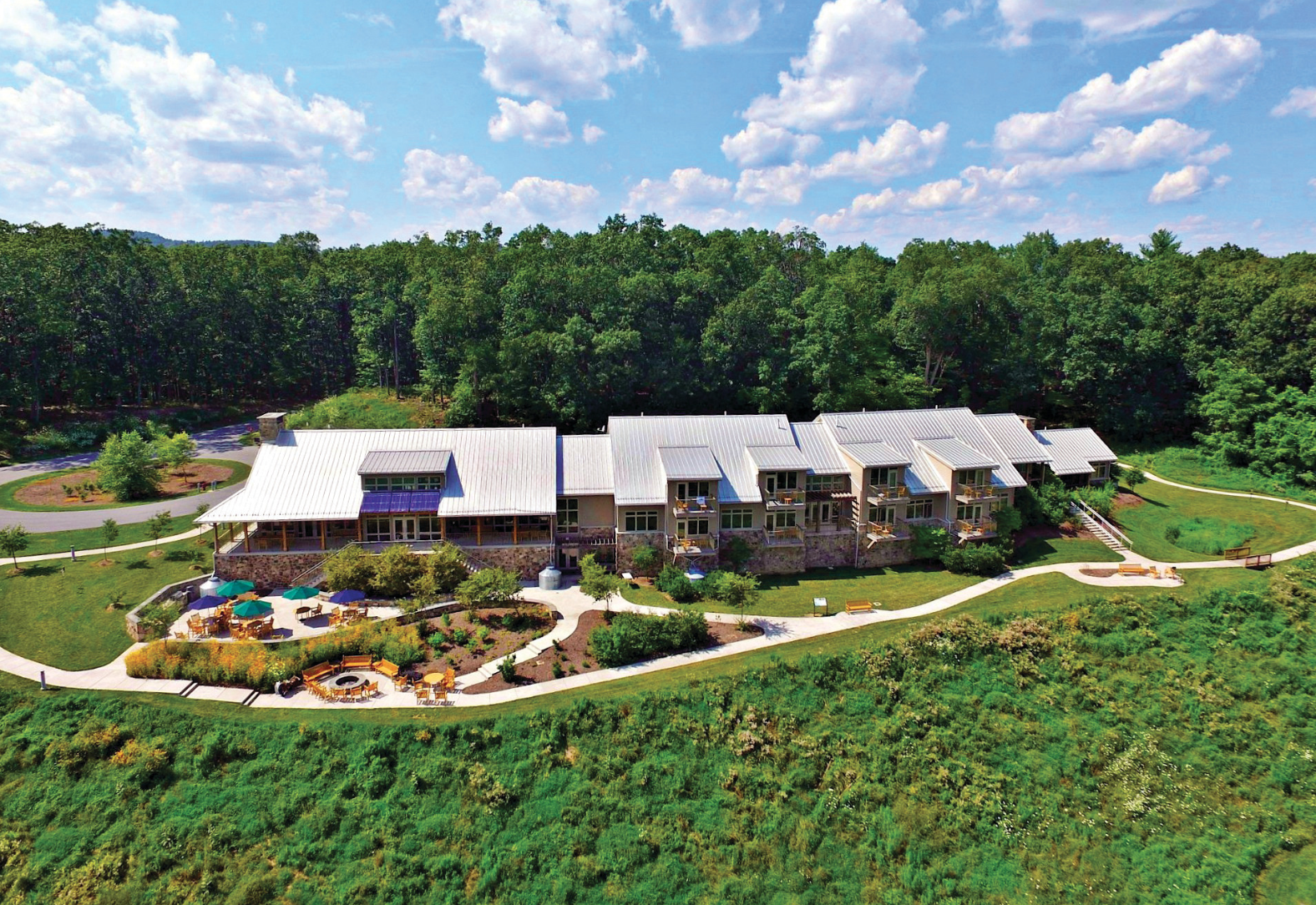
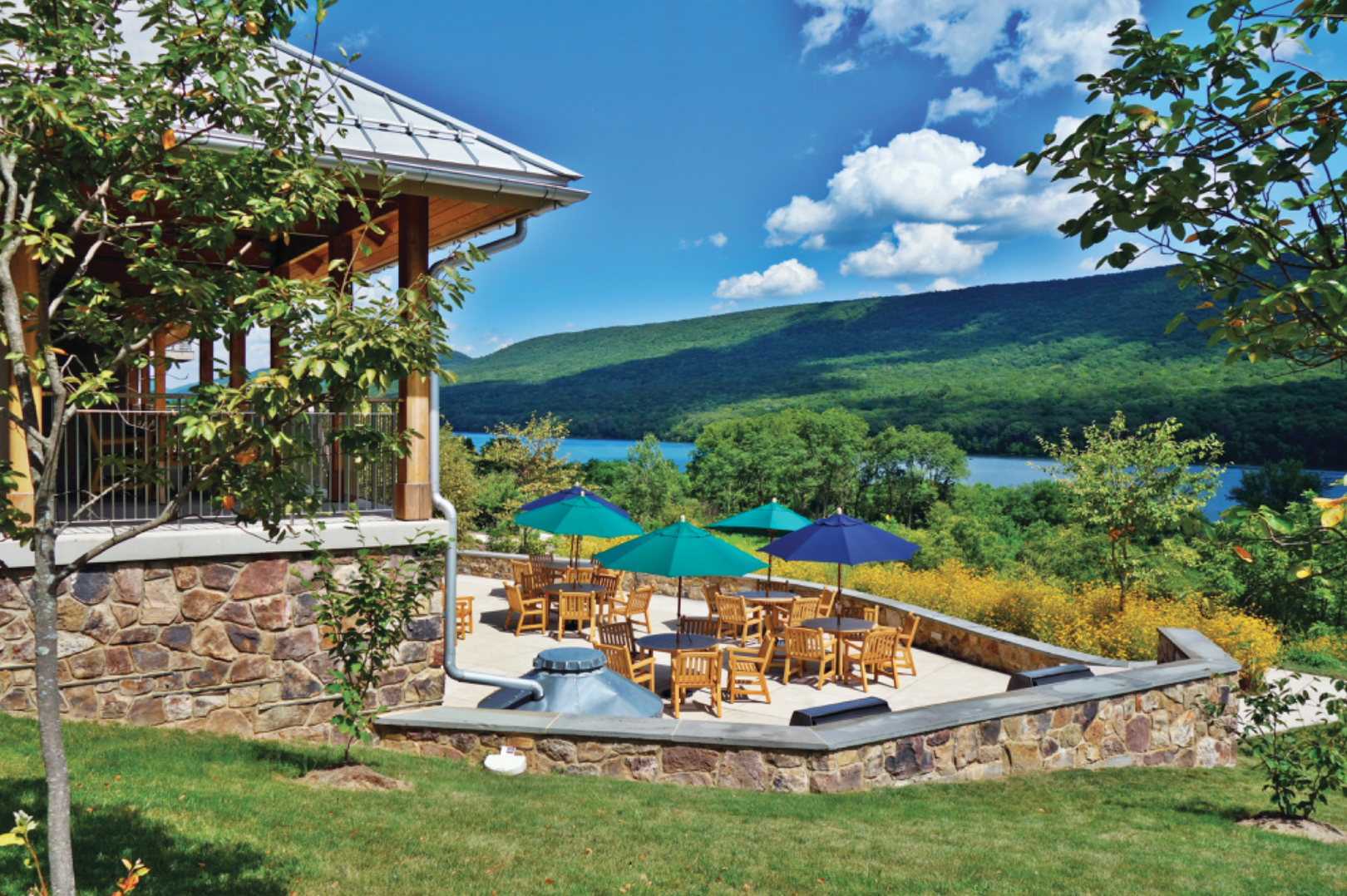
Occupying nearly 6,000 acres of the Pennsylvania Wilds, Bald Eagle State Park in Centre County has 14 miles of nature trails and a 1,730-acre lake for boating, paddle boarding, kayaking and canoeing. The Nature Inn at Bald Eagle, an eco-lodge inside the park, holds a LEED gold rating from the U.S. Green Building Council, built with sustainable features such as geothermal heating and cooling, a solar water heater, rain gardens and a recycled steel roof. The inn offers year-round lodging with a bird’s-eye view of the lake and surrounding hills. Breakfast is included; box lunches, takeout barbecue and ready-to-grill dinner entrees are available for pre-order. During the high season (April to October) and special birding events, the inn books up one to two years out.
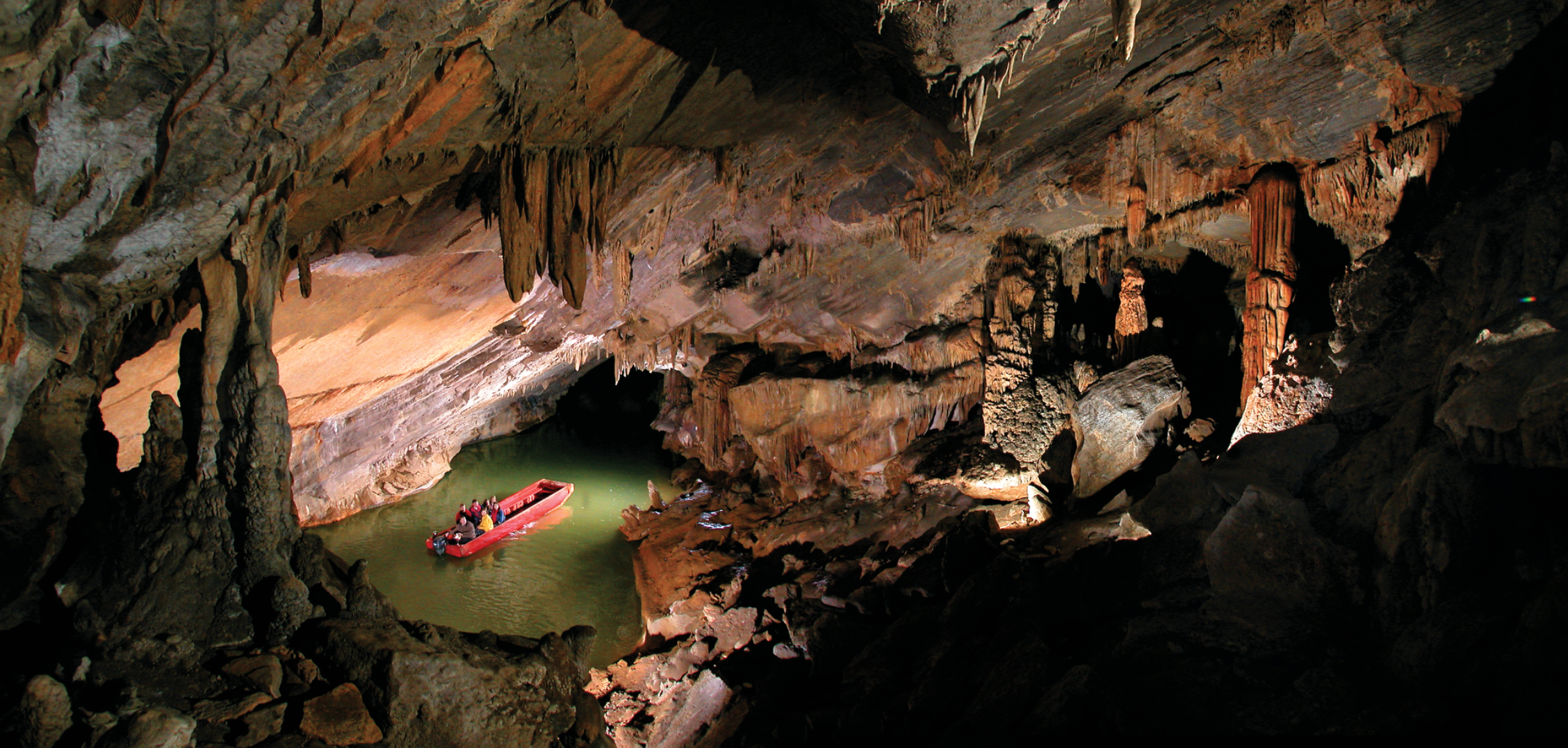
Not far from the inn (close as the crow flies, but about a half hour by car) Penn’s Cave and Wildlife Park is America’s only water-filled limestone cavern. Take an underground boat tour to marvel at stalactites and stalagmites, flowstone, draperies and columns formed over thousands of years. The park also offers wildlife and offroad mountain tours, a “Miner’s Maze,” and, for little ones, gemstone panning for semi-precious stones, fossils and arrowheads. Soaring Eagle Wetland has short, accessible walking trails and fishing platforms along Bald Eagle Creek.
State College, home to Penn State University and the famed Nittany Lions, is a lively college town (especially during football season) about 30 miles southwest of Bald Eagle State Park, and the anchor of a region known as Pennsylvania’s “Happy Valley.” It’s a good spot to overnight if the park lodging is full, or if you’re craving more nightlife than the company of nocturnal woodland creatures. Since its founding in 1931, the Georgian-style Nittany Lion Inn has hosted a veritable who’s who of guests, ranging from Robert Frost and Eleanor Roosevelt to Jack Nicholson and at least two U.S. presidents.
A stroll about campus finds well-groomed streets with names like Homecoming Drive and curious signs on academic buildings. (One marked “Portal to the Earth, Energy, Material Sciences” left me wondering if stepping through its doors would lead to another dimension.) The Palmer Museum of Art boasts a collection of more than 11,000 objects and artifacts, from ancient Andean figurines to 20th-century works by Georgia O’Keefe and Marsden Hartley. Wander the nearly 400-acre Arboretum at Penn State, with stops in its excellent Childhood’s Gate Children’s Garden and Pollinator and Bird Garden.

Just outside of town, the 4.7-mile Mount Nittany loop hike is rocky and steep, climbing almost 1,000 feet in elevation. It’s a great workout with abundant birdsong, valley views and blooming mountain laurel in late spring. A wildlife-reporting chart listed several black bear and cub sightings, along with an alleged glimpse of “the Lorax” (I wish). For a gentler walk, try the 2.6-mile Hobie’s Trail Loop at Colyer Lake.
State College’s Allen Street Grill serves artisanal fare such as pork chops with duck fat cassoulet and seafood linguini. Plant-based eaters will appreciate its vegetarian menu, which is more than an afterthought.
With 80 beers on tap, you won’t go thirsty at Federal Taphouse, a popular campus watering hole above the Target store. The Penn State Berkey Creamery, part of the university’s Food Science department, is a local institution famed for scoops in flavors like Alumni Swirl (vanilla ice cream with mocha chips and blueberry) and Grilled Stickies (cinnamon ice cream with sticky-bun pieces and streusel swirl).
At Breakfast on Boal in neighboring Boalsburg, start the day with a burrito with a zippy house-made green chili sauce, or hearty biscuits with sausage gravy.
In Hublersburg, the eponymous Hublersburg Inn has a cozy bar and casual outdoor dining area serving sweet potato fries, tacos, burgers and Philly cheesesteaks alongside local and seasonal brews, sometimes with live music. Goot Essa is worth a detour for artisanal alpine, cheddar, sheep and goat cheeses. This is Amish country, so you’ll likely see a few horse-drawn wagons on the road.
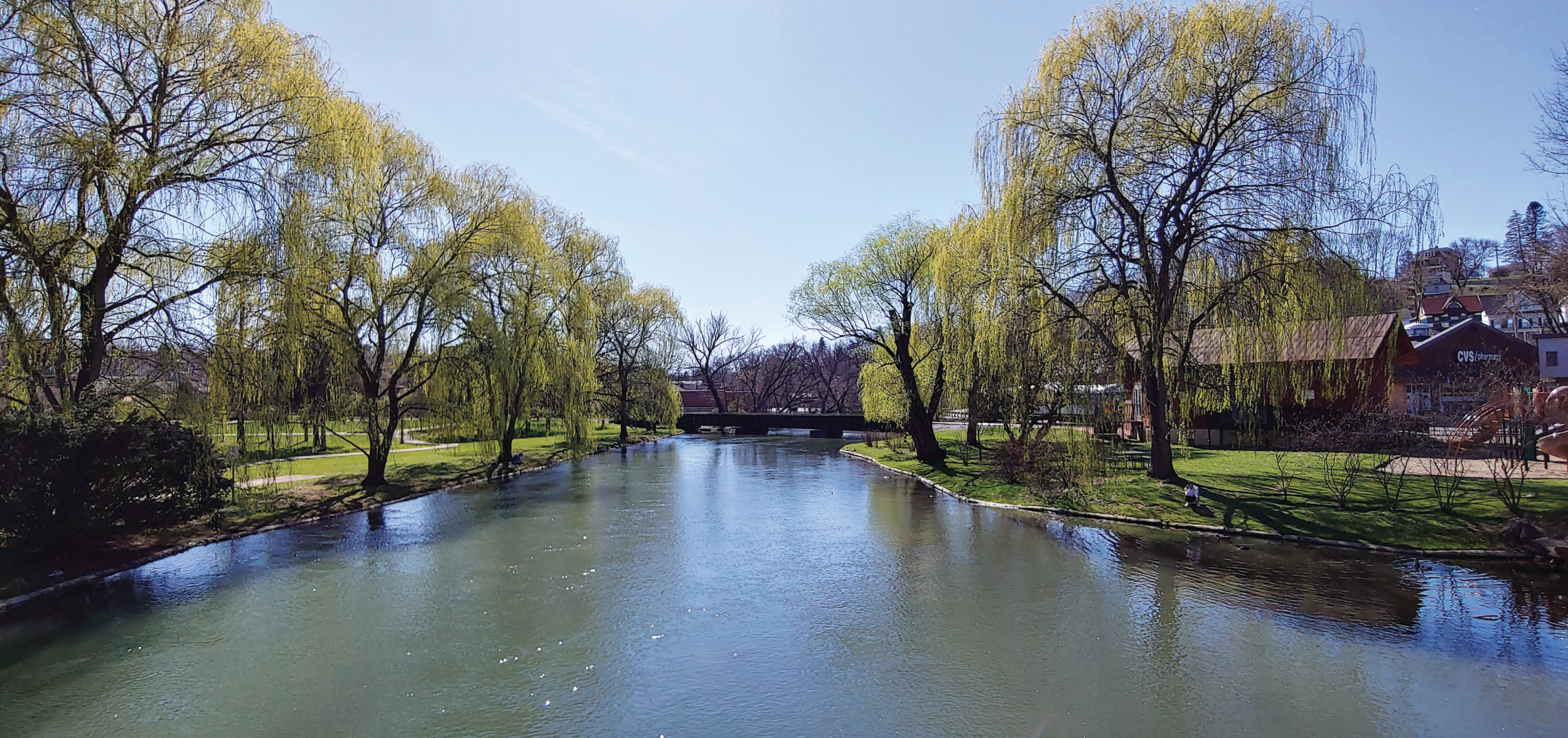
The small town of Bellefonte, founded in 1795, offers historic tours with insights into its gorgeously preserved Victorian homes and Underground Railroad history. Along the river walk, the Gamble Mill Inn & Suites, tucked inside a stunningly renovated 1786 grain mill, is home to farm-to-table restaurant Creek, and Republic, a craft cocktail bar. Stop by Bonfatto’s Italian Market and Corner Cafe for espresso drinks, pastries and subs. After a riverside stroll in picturesque Talleyrand Park, sip a craft cocktail at Big Spring Spirits or enjoy a craft brew at Axemann Brewery.
Arlington travel writer and naturalist Amy Brecount White enjoys immersive wildlife interactions of all kinds.