
Arlington residents and landscaping companies will no longer be allowed to use gas-powered leaf blowers or other gas-powered lawn equipment as of July 18, 2029, per a unanimous vote by the county board. County officials cited noise, public health and pollution as main concerns driving the decision.
Residents and commercial landscapers who currently rely on gas-powered machinery now have a 36-month (3-year) transition period to switch over to electric equipment.
Although the thorny proposal sparked an outpouring of public input, the central debate during the July 18 county board meeting was not whether to move ahead with the ban, but rather over how quickly it should be implemented.
The board ultimately extended the transition period from 18 months to 36 months after concluding that a longer lead time would give residents and businesses the necessary time to plan, while giving county staff more prep time for implementation.
All five county board members voted in favor of the measure, as well as the extended, 36-month phase-in period.
“I’m all about environmental sustainability and doing what’s right, reducing emissions, noise from gas-powered leaf blowers. But I’m equally concerned about how we implement this policy and how it impacts the small business community,” board member JD Spain said during the July 18 meeting. “I’ve spoken and heard from small business owners, landscapers, members in the business community, and there has been a very consistent message and theme. They need time to adapt.”
Jennifer Fioretti, Assistant County Manager for Climate Policy, says the additional time will make the transition more accessible and affordable. “While considerable progress is being made every year, the performance of electric vehicles is still evolving, particularly on the commercial side.”
The Debate
The vote comes at the end of a yearlong debate that pitted residents tired of noisy leaf blowers against professional landscapers and their clients.
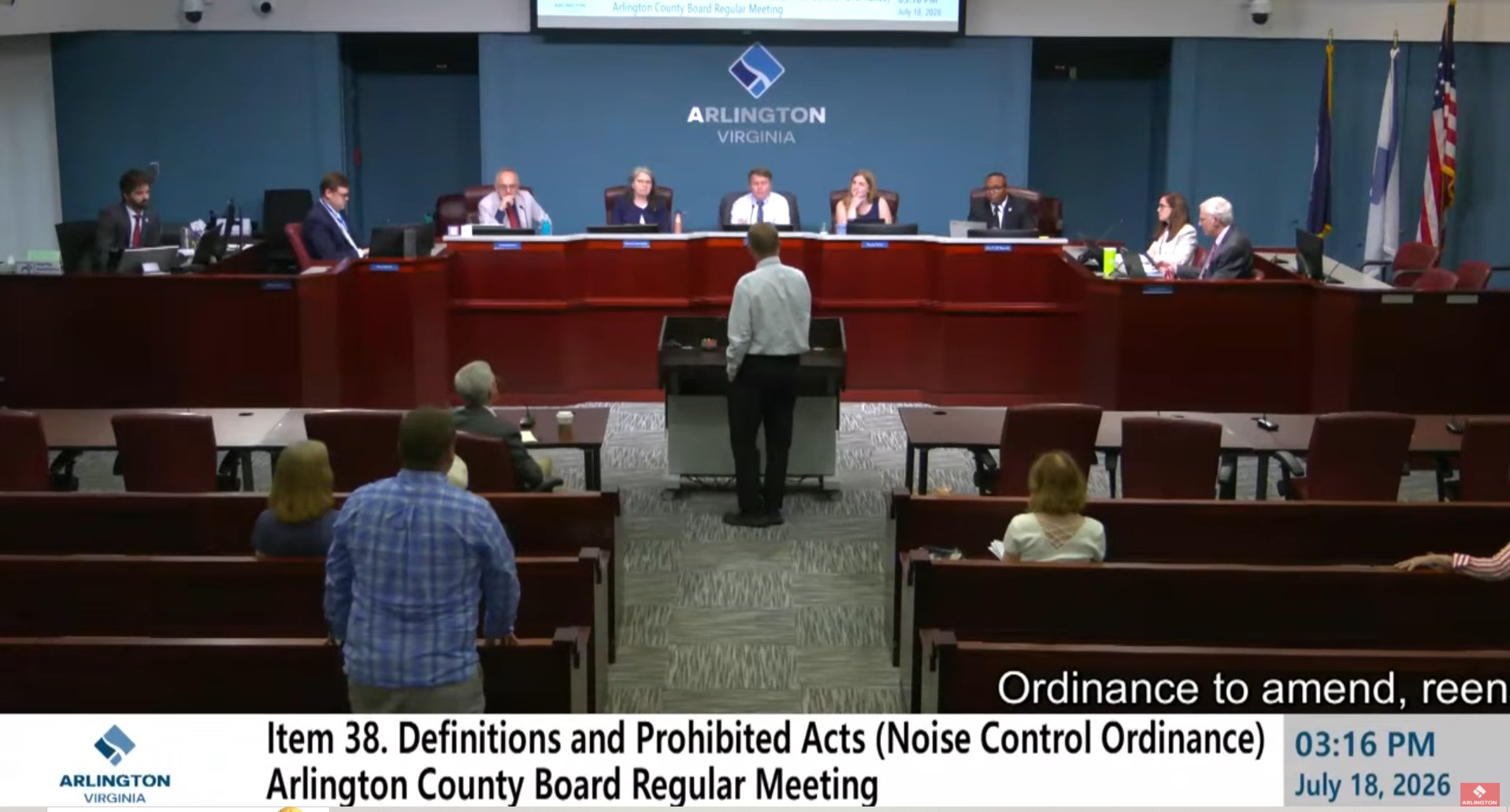
“A gas-powered leaf blower—I looked this up—is 95 to 105 decibels, and that’s more than a Mack truck,” Carol Parker, a 40-year Arlington resident, told the board. “So, this is what I listen to underneath my bedroom window with my next-door neighbors. I have six neighbors who all use these things within a two-house radius of my property.”
Professional landscapers say the change will make it prohibitively expensive to run their businesses. Several lawn care company owners spoke out against the measure, as well as the proposed 18-month transition period.
“The battery-powered blowers weigh 50 to 70 percent more than the gas option, which is going to place additional strain on our hardworking employees,” argued Todd Darling, a lifelong Arlington resident and owner of Darling Lawn Care. “For my company alone, the investment would be about $140,000. That includes blowers, batteries, chargers, generators and a charging facility with the electrical capacity of multiple EV chargers. After a few years, these batteries are worthless. They have no value and they need to be replaced. In fact, the cost of the batteries alone will exceed the value of my entire fleet of mowers and hedge trimmers.”
Many landscapers say price increases for their customers will be inevitable as they absorb the cost of purchasing new equipment.
In a letter to clients that preceded the county vote, James Lo Monaco, who co-owns Paul’s Best Lawn Service with his brother Tim, noted that the county hasn’t held itself to the standard it now wants to impose on local businesses.
“Arlington County began transitioning its own equipment to electric power back in 2022, when it received federal funding to help make that switch,” he said. “That’s a three-plus year head start with financial support behind it—and the county still hasn’t reached full electric conversion.”
The Policy
The decision makes Arlington the second Northern Virginia jurisdiction to implement a ban on gas-powered yard equipment. (The Alexandria City Council enacted a similar ordinane in May, 2025.) Washington, D.C. and Montgomery County also restrict the equipment.
County officials say the issue spurred one of the most active public engagement periods they have ever seen. Nearly 4,000 residents contributed to the discussion period over the past year, Fioretti says. About 3,700 participated online and more than 200 provided public comments at board meetings.