
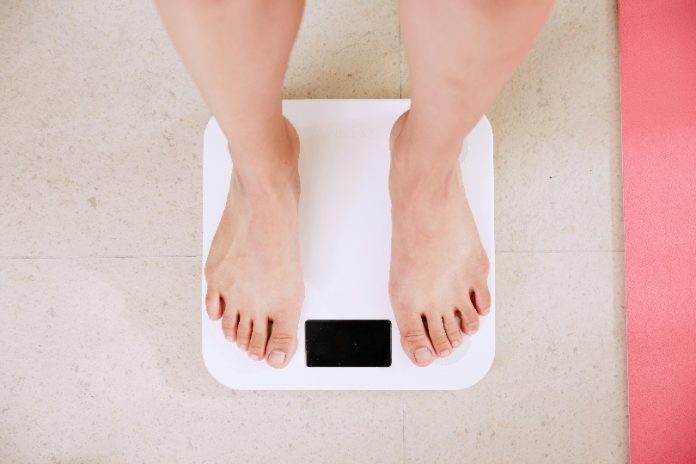

Did you resolve to lose weight in 2026? Eat healthier? Exercise more?
If so, you’re not alone. About a third of Americans make New Year’s resolutions, and for 79% of us who do, those pledges relate to health.
The intentions are always good, but for some, those resolutions can become a slippery slope, warns Christie Dondero Bettwy, executive director of Rock Recovery, an Arlington nonprofit that provides eating disorder therapy services for anyone 10 and older, regardless of their financial status.
“A diet is any kind of restriction, any kind of change in our food intake for the intended purpose of weight loss,” Dondero Bettwy clarifies. “The problem with brains is, we don’t know how someone’s brain is going to react to the restriction. For some people, they start the diet. It seems harmless.” Until all of a sudden, it isn’t.
Rock Recovery sees a common trajectory this time of year, she says. “Clients have come to us and been like, ‘I never meant to develop an eating disorder. I just wanted to lose a few pounds,’ or ‘This thing I started to be healthier, to feel more in control, has suddenly got a grip on me, and I feel totally out of control. I feel totally helpless.'”
A third of people who go on diets will become chronic dieters, Dondero Bettwy says, and of those, another third will develop clinically diagnosable eating disorders. One study out of Harvard’s T.H. Chan School of Public Health found that 9% of the U.S. population will experience an eating disorder in their lifetime.
New Year’s resolutions, coupled with recent trends away from body positivity and the prevalence of GLP-1 drugs like Ozempic, have Dondero Bettwy worried. We asked her to elaborate.
This interview has been edited for length and clarity.
How does dieting lead to disordered eating?
Everyone’s like, Lose weight, lose weight, get your body mass index down. And so you restrict, you diet. But because you’re not nourishing enough, you’re not eating enough, you’re not taking care of your body enough, our brain sends out these alarm bells, which often cause us to go into binge behavior. Restriction happens first, our bodies go into alarm, we have a binge, we feel shame, we restrict again, and the cycle keeps going.
What makes an eating disorder clinically diagnosable?
The big criteria are: How much is it interfering with your daily life and what’s the severity of symptoms? The three main eating disorders are anorexia, bulimia and binge eating disorder. Binge eating disorder, I would say, is the most common eating disorder.
Who is most at risk?
Unfortunately eating disorders don’t discriminate. The typical age of onset is often the teen years up through early adulthood. At Rock Recovery, our youngest client right now, I believe, is 9, and our oldest is 78. You can struggle at any age, and regardless of your gender, although more women seek help than men because of the stigma. The LGBTQ+ community often is at a higher risk. Black, indigenous and other people of color generally struggle at similar rates as their white peers, but they don’t get diagnosed as often, and they don’t seek help as often. So unfortunately there are access gaps in treatment.
What are signs that someone might be struggling?
Weight loss or a weight change can certainly be an indicator that something’s going on. People isolating themselves is a huge red flag—either spending less time with family and friends, being less interested in things they used to do, not wanting to eat meals with the family or with their friends. You know, the friend who shows up to the group dinner and says, “Oh, I already ate. I’m just going to grab a drink or grab whatever.” On the binge eating side, if you notice food in your home disappearing, you find a lot of wrappers, that can be a sign.
What can you do when you see someone needs help?
Share your concern. People will probably be defensive. They might not necessarily receive it well up front. It’s scary to be told this thing that someone is doing to feel safe, to feel worthy, to feel in control, to feel OK, is bad. We always want to acknowledge that and validate that. Say, “Hey, I love you. I’m really worried about you. I see you withdrawing. I see you making comments about yourself and I don’t like hearing you talk like that. I really care about you. I think maybe you could use some support. I think maybe we could call a therapist or read this book or read this blog to think about what your relationship with food might be like.”
Is there an ideal window for intervention?
It’s never too late to get help. Eating disorders aren’t entirely about food. That’s the main driver, but it’s about so much more. It’s about your life. It’s about your relationships. It’s about coping. It’s about control. It’s about trauma. It just affects every part of our lives. Calling a therapist trained in eating disorder therapy is the best first step because they can help assess what’s going on.
Where do GLP-1s fit into all this? About 12% of Americans have used some form of the drug, according to Rand.
Intentional weight loss for someone with disordered eating is a very dangerous step, because it puts people in a place away from intuitive eating. Intuitive eating teaches people to listen to their body’s hunger, fullness and satisfaction cues to guide food choices, rather than following external diet rules or restrictions. Some people could go on a medication and really, really decline into their eating disorder. The idea that a GLP-1 takes away hunger, takes away satiety, that natural relationship between eating and hunger and fullness, that’s just scary to me. There’s a lot of complexity from a behavioral health standpoint. I’m not sure every [medical professional] providing a GLP-1 is thinking of the behavioral health side of it.
Media reports say that body positivity is ending, especially as more celebrities show off ultra-thin frames. Are you noticing that, too?
I feel like the fat phobia in our world is coming back in, and body positivity is phasing out, which makes me so sad. Thinness is more prevalent, and that makes me nervous. The thinking around GLP-1s is complex, but I also think people feel a lot of pressure to lose weight at all costs.
There will always be people who want to lose weight. How can they approach that safely?
Don’t focus on a number. Focus on how you feel. So, it’s not about losing X number of pounds. It’s about feeling free around how you handle food, feeling like you can increase your energy levels. Feeling like you are making good choices and being intentional about caring for yourself in body, mind and spirit. Make it more about behaviors than about the result, because the behaviors matter a lot more for our health. If that means going on walks, seeing more friends, cooking more meals at home, eating more fruits and vegetables, whatever the thing is, make it about that—not about how many pounds you lose or other numerical measurements.