

On March 13, 2020, life as we knew it—at least for those of us with school-age kids—came to a grinding halt. Within a span of 13 hours, schools in Arlington, Falls Church City and Fairfax County announced that they would be closed through spring break in response to Covid-19. Ten days later, Gov. Ralph Northam made the decision to close Virginia schools for the rest of the school year.
And just like that, our reality was tipped sideways. With little guidance from those in charge and even fewer answers to comfort our kids, we braced for a world of homeschooling and lost sports seasons, of missed performances and virtual graduations. Amid the uncertainty of a global pandemic, families also had to grapple with upended routines and the educational fallout of quarantine.
The staff and teachers at our schools, meanwhile, were tasked with inventing the remote learning process almost overnight—including determining which interactions between teachers and students would be live (“synchronous”) versus prerecorded or assignment-based (“asynchronous”).
“We were building the plane as we were flying it,” says Bridget Loft, assistant superintendent of teaching and learning for Arlington Public Schools (APS). “Some families had the means to dive headlong into distance learning, and some didn’t. We tried to shoot for the middle. We also tried to be very mindful of equity, which included having a device at home and knowing how to use it, ensuring wireless connectivity and working through any language barriers that might exist.”
Private schools, for the most part, didn’t miss a beat; many were able to ensure that their students had the necessary resources to learn new content and attend live classes online. But public schools found themselves in the awkward position of having to truncate the third quarter and largely suspend the teaching of new concepts for the remainder of the year.
In Arlington, public schools adopted an asynchronous model, limiting fourth-quarter assignments to concepts that had already been taught. There would be no fourth-quarter grades; instead, kids had the option of completing enrichment work to raise their year-end grades by one letter grade. The criteria for raising grades were largely left to individual teachers to determine.
Falls Church City and Fairfax County public schools attempted a hybrid model—a combination of live and asynchronous instruction—and implemented similar policies with regard to fourth-quarter grading. But the holes in the enrichment-only approach soon became apparent. Students already earning A’s had little or no incentive to continue participating in schoolwork. Students who had specialized education needs—or didn’t have the space, technology or parental guidance at home—struggled to take advantage of the opportunity to improve their grades.
Technology was a flash point. Knowing that APS issues personal devices to all students starting in third grade—iPads for elementary and middle students; laptops for high-schoolers—some Arlington parents were baffled as to why every student didn’t have access to a personal device, and why schools couldn’t invest in hot spots to ensure connectivity.
“Kids get devices in third grade, but many schools hadn’t been sending their devices home, so kids weren’t acculturated on to how to take a device home and use it,” Loft explains.
For families without internet access, APS provided MiFis—personal broadband devices—as a stopgap measure. “But they had limited capacity,” Loft says. “If you have more than one kid or someone else in your household who’s trying to get online, that’s going to eat up the internet for the day.”
Students’ home lives were yet another variable. “My home wasn’t a great environment for me to focus on schoolwork or attend online meetings,” says Netsanet Gumru, a recent Wakefield High School graduate who will be attending the University of Pittsburgh this fall. “I had to babysit my younger brother who’s in kindergarten and share space with my other brother who’s in 10th grade. All the places I usually study were closed. This pandemic affected all of my study habits and schedules.”
Gumru lives with her family at the Gates of Ballston, a subsidized housing complex run by AHC, a local nonprofit that provides social services and educational support for people in its communities.
“We’re working to make sure families can stay in their homes and put food on their tables,” says AHC communications director Celia Slater. “We help out with learning issues where we can. One little girl was trying to do her homework on her mom’s cellphone, so we got her a tablet. But some families don’t have Wi-Fi at home, and [community] hot spots are difficult to access if you don’t have transportation.”
For parents concerned about loss of learning, Loft offers the reassurance that their kids didn’t miss out on as much as they might think. Typically, “there are far fewer new concepts addressed in fourth quarter than in quarters two and three,” she says. “By not introducing new content, we were almost closing the gap, shoring up the foundation of everything they’d learned thus far.”
Not all parents saw it that way.
“The lack of new content was a huge problem,” says one dad whose children attend Washington-Liberty High School. “It leads to boredom and disengagement. How exciting could it possibly be to get a one-way lesson on a topic that you’ve already been taught?
“I certainly support directing re-sources toward helping families overcome the opportunity gap,” he says. But he thinks APS’s decision to freeze the fourth-quarter curriculum likely only widened the disparity: “Households with greater resources or more-engaged parents will find private offerings to help make up that gap in new learning. The kids who will be most injured are those from disadvantaged households who depend on APS to provide access to educational opportunities.”
Or, as another Arlington parent puts it: “The same kids get left behind, they just get left behind in different ways. If anything, the divide is even more pronounced” when parents with means end up seeking private supplemental education for their kids.
Teachers did what they could to engage students remotely during quarantine. Though APS officially adopted an asynchronous model (meaning no live classes), teachers maintained regular “office hours” online. Some organized digital class meetups at their discretion, using various video streaming platforms. Those connections allowed them to touch base with students on everything from emotional well-being to AP test prep.
Swanson Middle School drama teacher Monique Caldwell worked with her cast and crew to reinvent the school’s spring production of A Wrinkle in Time as a virtual performance, conducting rehearsals and production meetings on Zoom and then Microsoft Teams. (The final production was streamed on Vimeo.)
At H-B Woodlawn Secondary Program, songwriting teacher Dan Paris challenged his music students to continue writing songs, then orchestrated several live online concerts throughout the spring.
“We did a bunch of scavenger hunts, where our teacher would post a list of things that you had to find around your house. That was cool,” says Miles Martin, a rising eighth-grader at H-B, who lives with his parents and older sister in Arlington’s Claremont neighborhood.
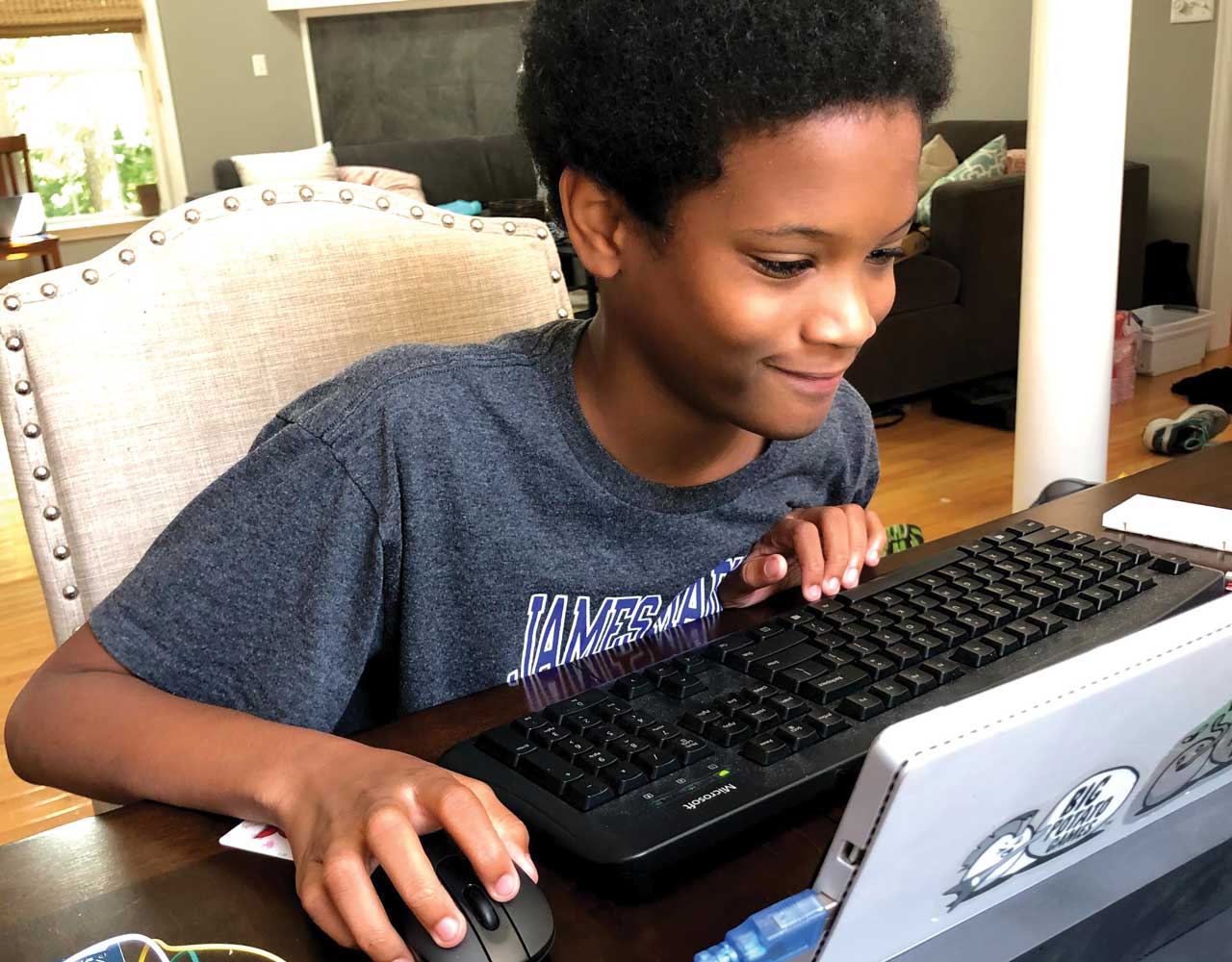
Even without the incentive to raise his grades (he already had A’s), Miles continued to participate in weekly school projects—writing poetry and sharing it with his English class using the Flipgrid app; building a circuit board for his robotics class; identifying wildlife around his home (his family retreated to their lake house in Orange County, Virginia) for a science project.
“All of our teachers did a good job of keeping in touch with us during fourth quarter,” Miles says. “They had a nice format for classes, with a couple of [live] meetings a day over Zoom or Microsoft Teams. Each teacher would post what we needed to do on Canvas with a link that we tapped on to go to the class. Then we’d do an activity, talk about how our days and weeks were going. It was kind of like being in actual school.”
But for other students, there was no substitute for in-person learning.
“The lack of human connection was a real problem,” says the mom of a rising seventh-grader at Dorothy Hamm Middle School who had been diagnosed with anxiety before the pandemic. “By mid-April, he seemed particularly sad, not his usual talkative self. He was becoming more withdrawn—his instinct was to curl in on himself, and it was becoming more pronounced. I had to force him to get out of his room, get out of the house.”
Elisa Nebolsine, a cognitive behavioral therapist based in Falls Church City, says that during quarantine she saw a notable spike in student anxiety and depression.
“I work with kids who are already anxious, and distance learning has been very difficult,” says Nebolsine. “The majority of kids I see aren’t finding meaning in the busywork. They feel disconnected from their peers. Every day feels the same. We need to treat this as a period of grief, then try to find ways to acknowledge the happy moments and remember that this feeling won’t last forever.”
Schools that were able to offer synchronous classes often saw better student engagement and time management, even when students weren’t learning new content.
But synchronous learning also had its drawbacks, as Fairfax County Public Schools discovered on April 14—the first day it tried to roll out live classes through the Blackboard platform. Virtual classrooms were hacked and chat rooms were defaced with expletives, pornographic photos and anti-Semitism.
“It was chaotic,” says Anne Neuman, whose daughter Becca was in her first year at James Madison High School in Vienna and was in one of the Blackboard classrooms that was hacked. “Becca’s first two classes that Tuesday went completely fine. Then she had Spanish, and all hell broke loose. It started off with kids in the chat room—boys ganging up another kid—but once they went to audio, there was profanity and yelling so loud that I could hear it down here in the kitchen.”
Becca’s experience was a tipping point for the Neumans, who have decided to send their daughter to private school in the fall.
They’re not the only ones seeking refuge in smaller class sizes and what they perceive as a more controlled environment. “We’ve definitely seen an uptick in public school families who are looking into private school options,” says Leigh Ann Cahill, director of Independent School Options, an educational consulting and placement firm based in Alexandria. “Parents of children in third grade and younger are the most concerned, since they often need more interaction and hands-on work instead of Zoom classes and online work.”
Kathy Essig, an executive functioning coach based in Arlington, says she is seeing the same trend. “The public schools have done a really lousy job,” she said during an interview in June. “All my private school kids received 90 to 95 percent of what they would have gotten in person. They were attending one or two fewer classes per week, but they essentially maintained a regular school day [online].
“Public schools have let all of us down,” Essig says. “I get that there are some kids who didn’t have devices, but there should have been some level of work-around. I don’t get what the thought was behind Let’s bring this to a screeching halt.”
Hindsight, says APS assistant superintendent Loft, has afforded some clarity: “If I could do it magically all over again, I would have gotten devices into everyone’s hands on March 13.”
Now Arlington schools, in partnership with county officials, are taking aggressive strides toward ensuring connectivity for all. In July, Arlington County announced it will direct $500,000 in funding to provide broadband internet access to APS students who don’t already have it. Funds received through the CARES Act will be used to purchase iPads for students in pre-K through second grade.
Loft acknowledges that distance learning is imperfect, and that some needs were unmet at the end of the school year—“like our Shriver Program students, who [were] receiving comprehensive physical therapy on a daily basis.
“Kids are going to be forever impacted by this,” she says. “We went asynchronous [in the fourth quarter of 2020] because we recognized that teachers have families, too, and we wanted to make sure they were able to balance their lives. Also, if we had live [classes] but some kids weren’t able to make it, that’s kind of stigmatizing.
“Looking forward,” she says, “we need to do a better job getting all of our teachers on the same platform. We need to systematize distance learning for teachers, which includes executive functioning and trauma-informed instruction—not just using the tool but understanding our kids’ experiences.”
As this issue went to press, the trajectory of Covid-19 was still a moving target. After weighing various options, public schools in Arlington, Falls Church City and Fairfax County in late July announced that they will begin the 2020-21 school year 100% online, with plans to phase in socially distanced classroom time once it is safe to do so.
APS superintendent Francisco Durán was the first leader of the three school systems to recommend a virtual start to the fall semester. He did so despite many families expressing a preference for at least partial on-site classroom instruction. Some parents even staged protests.
“After reviewing feedback from families and staff, we found the three most important issues were access, content and teacher support,” says Durán, who stepped into the superintendent role at APS in July after leaving his previous post as chief academic and equity officer for Fairfax County Public Schools.
APS has ramped up its teacher training accordingly, he says, is addressing problems with digital access and intends to teach new material in the fall. “We’re making very difficult decisions. Health and safety are the forefront, coupled with instruction—students need to learn.”
“We’re also dealing with trauma, stress and isolation. The more we can return some sense of normalcy to our families, the better, but we don’t want to compromise health. It’s very difficult to follow that data. It’s changing every day.”
So far, each family’s ability to adjust and engage with distance learning has been as varied and diverse as our population. There are as many stories of disappointments, hardships and failures as there are of successes and silver linings. The following interviews were conducted at the end of the fourth quarter of the 2019-20 school year.
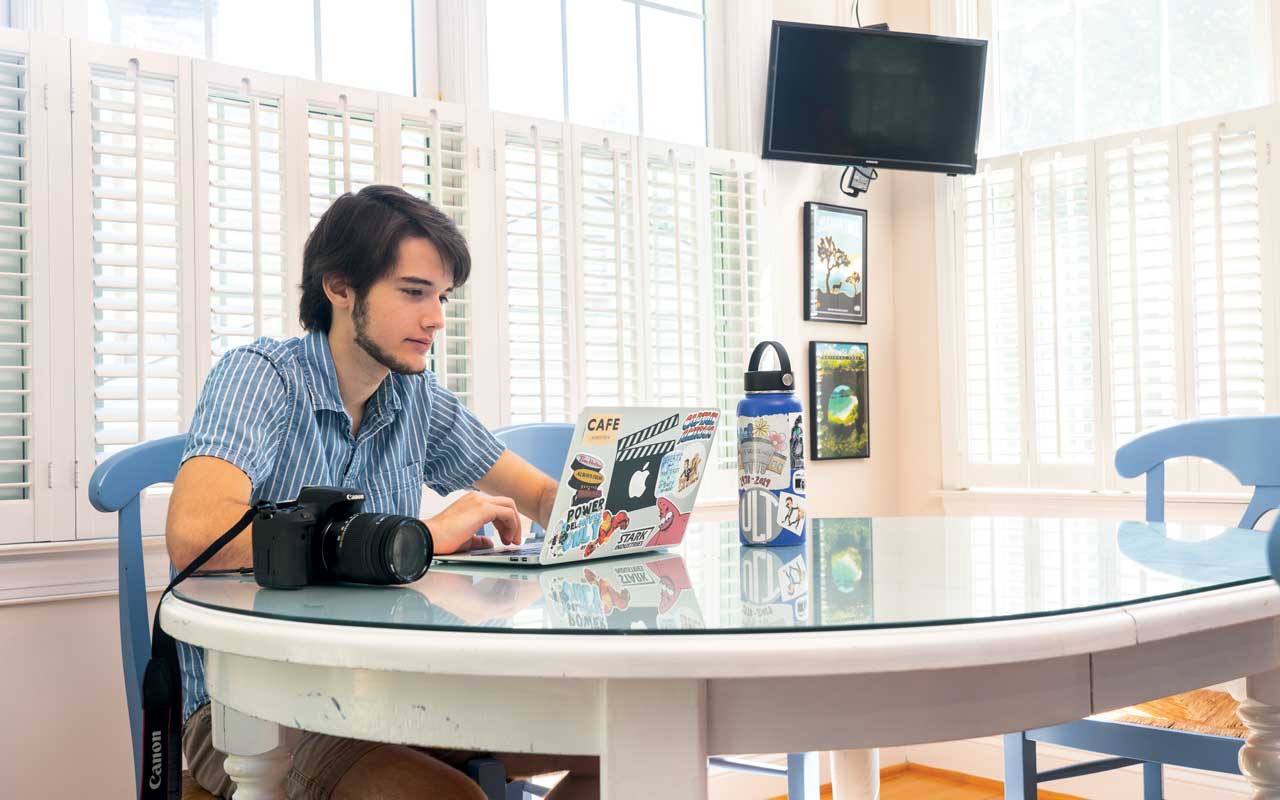
John Barnes, 17, is a rising senior at H-B Woodlawn. He earned a fellowship with the PBS NewsHour Student Reporting Labs before the quarantine moved both school and the fellowship online. He works part time at Bakeshop in Clarendon and Falls Church, and lives in Arlington’s Yorktown neighborhood with his mom.
“When school was canceled, I already had the grades I wanted, so I chose the optional fourth-quarter work for every class. But by late March, I started to give up on school. I was still working [at Bakeshop] and all of my anxiety about coronavirus started giving way to physical symptoms—increased heart rate, insomnia. Distance learning wasn’t working for me, even when I was trying super hard, because there was no extrinsic motivation. I had all A’s and it didn’t matter—all this bad stuff was still going on in the world.
“I started thinking, Do I really want to keep doing this busywork? I worried that I wouldn’t experience any of the things I wanted from life or even have the high school experiences I’d been looking forward to. I was so worried about getting coronavirus that I stopped asking to be scheduled at my job.
“On March 13, I had made a list of things I really wanted to do but didn’t have the time—like record an album or finish a screenplay—but even with all this time, I had no motivation to do any of them. Before quarantine, I was doing too much; now I’m not doing anything, and that’s making me anxious. I need to find some kind of middle ground. I think this has been my lowest state of mental health ever. I talked to my mom about it and decided to start going to therapy.
“Sometimes Zoom calls [organized by H-B teachers] have been helpful. The teachers are doing a good job of keeping up traditions remotely, but seeing friends isn’t consistent and it’s hard to keep a social connection going. When I do get to see friends [at a social distance] in a parking lot or wherever, it feels even more important. I’ve been able to practice guitar and get better. I continued to do a lot of work for my fellowship because it actually had meaning, staying up late to edit videos.
“The pandemic has also helped me realize what I really care about—like the friends I want to keep in contact with. I was always hesitant about [the practicality of] a career in show business, but those are the things I’m daydreaming about now. I’m not daydreaming about calculus.”
See Barnes’ work from the PBS NewsHour fellowship at youtube.com/johnthecoolguy123.
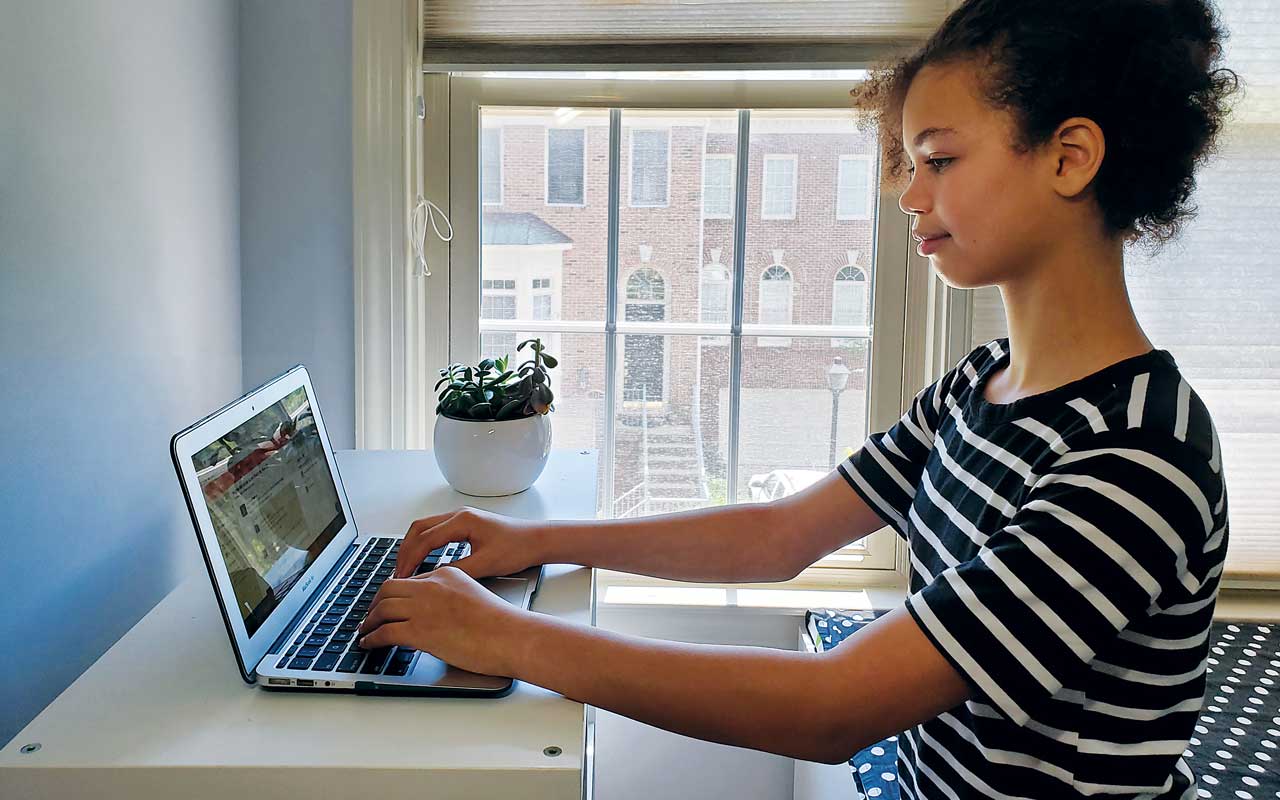
In June, Lana Heard, 11, graduated from fifth grade at Thomas Jefferson Elementary School in Falls Church. This fall she’ll attend Mary Ellen Henderson Middle School, where her brother, Corey, recently graduated from eighth grade. Lana’s mom, Eden, is an attorney with the federal government. Her dad, Addison, is a consultant with Booz Allen Hamilton. Both parents worked from home full-time during quarantine. Falls Church City Public Schools conducted distance learning through a platform called Schoology. Teachers did introduce some new content, but all fourth-quarter grades were pass/fail.
Lana: “On Schoology, we had a scheduling table with five sections for each day, Monday through Thursday. Friday was a flex day. We had two videoconferences a day except for Friday, which was optional. Morning conference was checking in and going over all the stuff you had to do for the day; afternoon conference would be half math, half whatever the other subject for the day was—science, language arts or social studies. Most of my classmates were on the conferences. Sometimes there were so many kids logging onto Schoology at once that they had trouble getting into the system.”
Eden: “But that happened only two or three times total—so, not bad from my perspective—and the school provided everyone with their own device. The teacher was always online and responsive and would gap-fill anything that was missed.”
Lana: “My math teacher tried this method called backwards learning. She gives the assignment and you practice it, and if you still have trouble then she gives you a lesson. It was pretty effective, at least for online learning. I liked the old method better. Maybe that’s because I was physically at school.”
Eden: “I feel like my kids were really lucky. If they needed help with a math problem, one of us could put our work down for five minutes and help them. I have friends who are single parents with two kids, and maybe their little one couldn’t do anything without them, which got really hard.”
Lana: “I hang out with my brother a few days a week—riding skateboards, making board games, having art competitions. We’re very competitive with each other. I haven’t really seen friends. I find that I’ve been spending more time alone. I do my work in my room, watch my show in my room, play with my action figures in my room. I really only come downstairs for meals and exercise. It’s not the same to hang out with your friends online as in person. I felt less encouraged to talk to my friends online.”
Eden: “Seeing them on FaceTime would sometimes make her sadder. Sometimes it was better not to see them than to see them in that capacity. One thing I’d commend the school district for—and I say this in regard to my older child, too—is that the teachers were constantly mindful of the fact that these kids were frustrated and angry and depressed, and that the good parts of school got pulled out from under them. We got messages from teachers checking in on the kids’ well-being. About a week in, my son’s math teacher called him and asked if he was exercising enough and eating okay.”
Lana: “I will hate it if we don’t go back to school in person in the fall. I’ve been looking forward to middle school. I just hope that I can have some part of sixth grade in the building. I would totally wear a mask in order to go back to school.”
Eden: “Overall, I was really impressed with how compassionate the school was and how they met each kid where they were. They gave them some substantive work that was reasonably challenging, but they also recognized that these kids were going through a lot of emotions and a lot of processing and they struck as good of a balance as anyone could under the circumstances. The silver lining for us—as our kids are wanting to separate themselves from their parents and spend more time with their friends—is that we get them at home a little longer. More movie nights, more walks together. This feels a little bit like cheating the fates because I get to reclaim a little bit more time with them. Maybe not a silver lining for them, but a silver lining for us.”
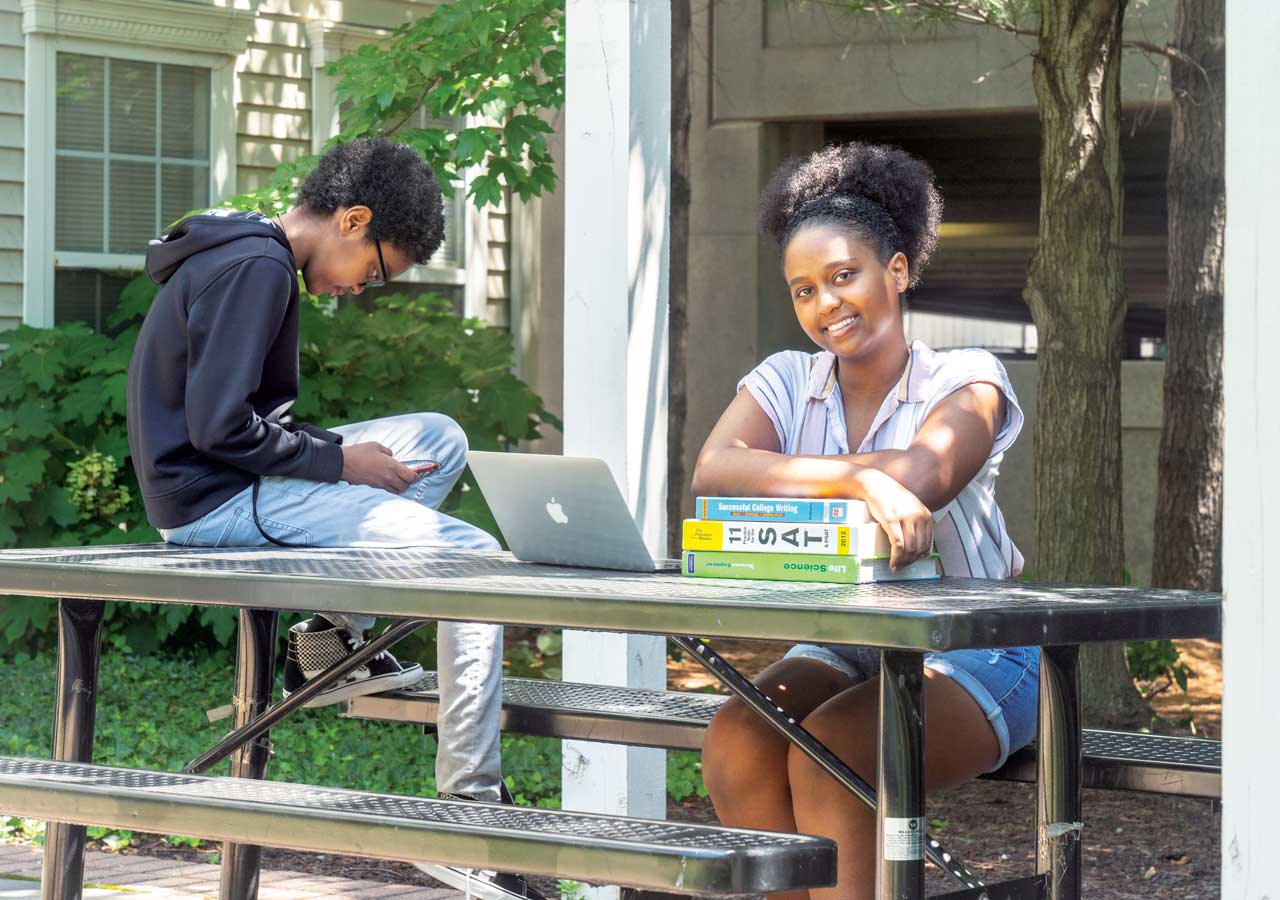
Elena Ogbe, 16, lives near Pentagon City. She was a junior at Wakefield High School, taking a full course load, including three AP classes, when the pandemic hit.
“The big implication of distance learning for me is the work environment. I live in a small apartment with six people, so I usually do most of my work at the library and at school. Before quarantine, I was rarely ever home; I stayed at school and kept busy. My apartment is very small, so being stuck at home is very stressful. I don’t have a desk, so I’ve been working on my bed, propped up against my wall, which has been causing me some back pain, and the amount of time I have to spend on my screen to complete my assignments has also been causing me eye pain.
“For me, AP English has been the hardest because of the workload. I tried to do it consistently, even at the beginning, when I didn’t know if it was going to impact my grade. But after a while, I couldn’t find the motivation to keep up. I felt trapped inside my house and was dealing with a lot of anxiety. I keep thinking that if I don’t get this grade, then I might not get the scholarship I need in order to go to college.
“Wi-Fi has been a problem. The five other people I live with also need to use it, so the Wi-Fi cuts out a lot, or the Global Protect [that APS has set up on students’ computers] will stop working and I won’t be able to use the internet at all. My [adult] sister who lives in Springfield had to pick me up so that I could take my AP exams at her house in a quiet space with reliable internet.
“I also have two older siblings and a brother in eighth grade. I try to make sure he does his work, but he’s the kind of student who needs the extra push from teachers. My brother and I go to tutoring after school, but now we’ve both been cut off from those resources.
“Doing well in school is mostly up to us. Our parents expect us to do well, but they went to school in Eritrea and don’t know how school works in this country. They give us money and transportation whenever possible, but they can’t help us with schoolwork. My mom had a job in hospitality and had to file for unemployment. My dad drives a bus in Fairfax. Thankfully he’s still earning some salary. My parents don’t tell me a lot about that.
“I don’t want to blame the teachers—they’re just doing their job. But my ability to raise my grade might determine whether or not I get a scholarship and whether I can afford to go to [college]. It could impact my whole future.”
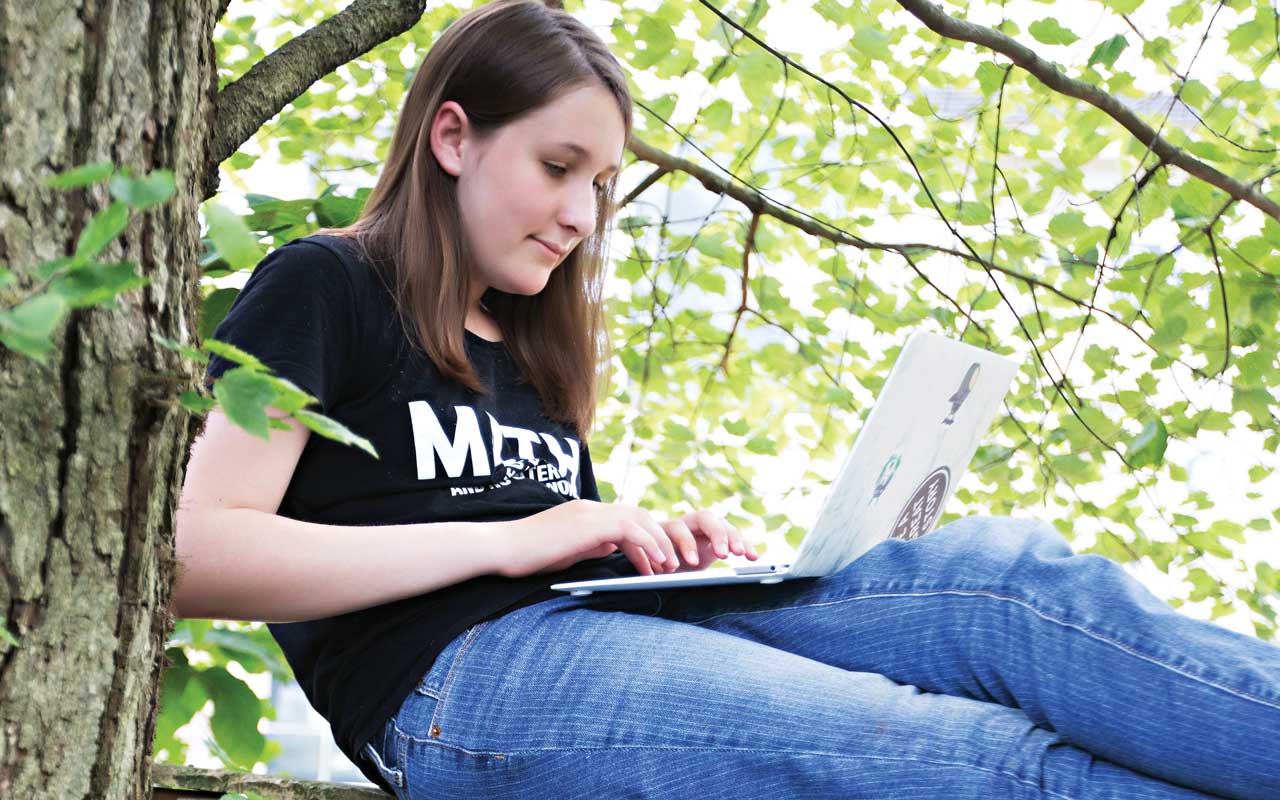
Ellie [last name withheld], 14, lives in Falls Church and was enrolled in seventh grade at Longfellow Middle School when the shutdown began. She has high-functioning autism as well as anxiety and ADD. Prior to quarantine, she attended school in a contained classroom environment with other students who also have learning and emotional challenges.
“On my first day [of middle school], I texted my mom: Please take me home. I don’t like it here. I couldn’t yawn in class without getting in trouble, and if we got something right playing a game, we weren’t allowed to have big reactions when we won. It was very frustrating. Even in my favorite subject, the teacher would take the fun out of class.
“Distance learning has been a lot better. My teachers have pointed out that I’ve been more engaged. Because I’m sleeping more, my mood has changed. I went from unhappy, grumpy, frustrated-about-school Ellie to overjoyed Ellie. My mom loves the new Ellie. [Synchronous] classes start at either 9:15 or 9:30. I’ve been showing up on time to help improve my grade because I want to get into a good college. During normal school, my grades were suffering, but now that I have more time to complete my work, I’m doing a lot better. If I miss a class or show up late, I immediately get on and apologize and teachers say, ‘Oh, it’s okay, Ellie, I’m just happy that you apologized.’
“I miss my friends, but we’ve made screen dates several times a week. I also get to spend about six or seven hours a day [playing] at the creek near my house. If I start to get my anxiety, I put on headphones and listen to calming whale sounds or play with my turtles. I can engage with schoolwork much better on a computer, and the environment at home is way safer and more calming. I want to keep doing school online, either through Longfellow or maybe private school. As long as I can keep going to the Old Firehouse at McLean Community Center after school.”
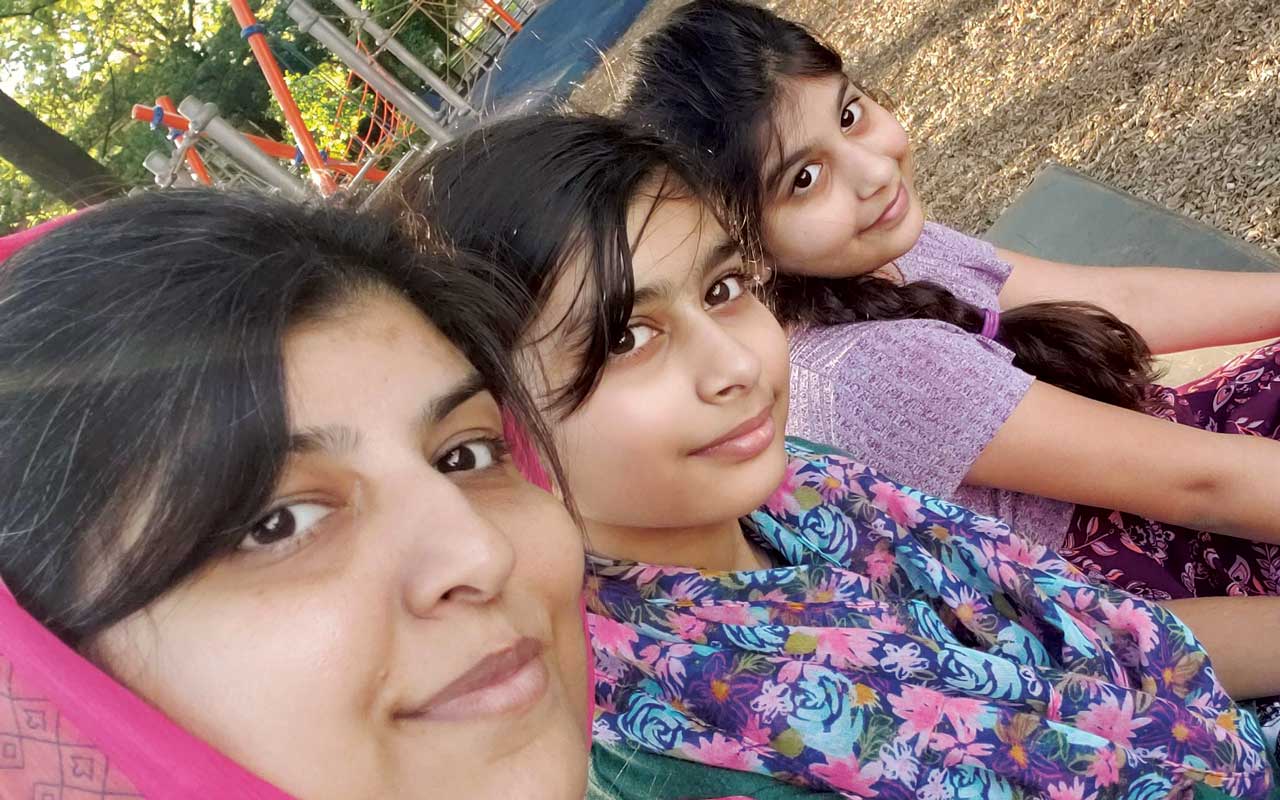
Anila Butt is a single mom living in Clarendon with her two daughters. During quarantine, Fatima, 11, was in sixth grade at Thomas Jefferson Middle School, and Kareema, 9, was in third grade at Long Branch Elementary School. Anila was a classroom assistant at Full Circle Montessori School and had been taking classes toward her college degree. She earned her bachelor’s degree in early childhood education on July 18.
Anila: “At the start, to be very honest, we didn’t know what things were going to look like for us. It blew my mind that I was going to have to be teaching my children by myself. My younger daughter has an IEP where she requires a lot of help from teachers, both during the school day and after school. English is our second language. My children know five languages—they speak Urdu and Punjabi at home, and they’re learning Arabic at home and Spanish and English in school. Kareema was depending on me so much that she couldn’t read one single sentence by herself. She really wanted me to be there. She had four different teachers sending her homework, but when the school started using [the remote learning platform] Seesaw, they were able to consolidate assignments.
“There was a lot of pressure to keep up with my job, but thankfully my employer was flexible. I was dealing with the stress of being a student, an employee and a mom. I remember one day when I was working and Kareema came to ask for help; then I got an email from a co-worker who needed something right away, and I also had to finish up some schoolwork for my degree. That was the moment I felt like I was going to cry. It was a lot of pressure. You don’t want to neglect your child, and you don’t want to be seen as not fulfilling your job. I’m a very responsible person—I didn’t want to give them the impression that I couldn’t work from home.
“I learned from my daughters that we adults are so used to having schedules that we don’t see the fruits that life is giving you. Now, this second life that we have at the moment, we’re cool with it. My older daughter sleeps in—she doesn’t get up until after 11. My younger daughter gets up at 8 a.m., gets her iPad, has a full day. Over the course of distance learning, she no longer needs my help. I had an online meeting with Kareema’s IEP counselor and I told her that she might be able to move on. She now reads everything and doesn’t ask for my help—she submits everything on her own. I don’t know if it was having more time, staying home, being relaxed, but she’s really changed.
“Emotionally, my girls are very good. Their life has been so up and down, but they really roll with whatever happens. Fatima didn’t even get upset that she couldn’t see her friends. We were outside at Rocky Run playground the other day and she ran into one of her best friends from school. It was like nothing ever happened.
“We also had our Ramadan—for the first time in eight years, I was able to stay home and do my prayers and break my fast with my children. This pandemic brought mental stress, but it also gave us the privilege to reconnect as a family. We are happy. We enjoy our life.”
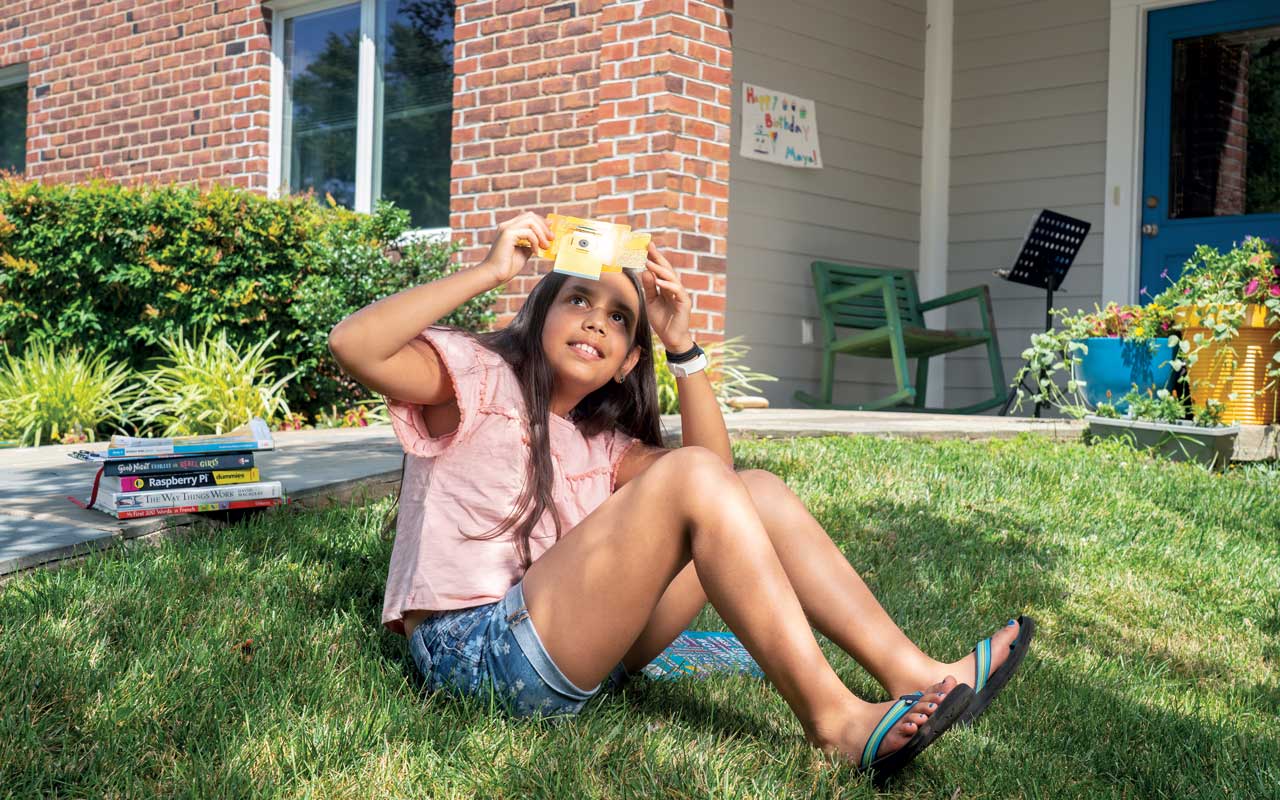
Maya Watson, 10, lives in Arlington Forest. She was in fourth grade at Burgundy Farm Country Day School in Alexandria when the coronavirus shut down schools.
“At the beginning of quarantine, our science teacher sent us little portable microscopes that we got to assemble on our own. We’d make slides with water, cheek cells, things like that. We got to look at them under the microscope and make diagrams, then post them so everyone could see.
“I used to wake up at 6 a.m. to get to school, but now I’m waking up around 8 a.m., which is when teachers start posting our work for the day. I do the posted schoolwork until around 9 or 10 a.m., then I have one or two Zoom [classes] in the morning. I have another Zoom call at 1 p.m., and then I might have assignments to work on in French, P.E. or music.
“For drama, we were doing commedia dell’arte, and so we did [the character] Capitano’s yoga class. We would do yoga poses and take pictures and send them in to our drama teacher. I’m still learning new things on flute, and we even had a virtual recital. We have math homework every day. After that I usually take a walk with my nanny, practice violin and flute, and read for a little bit. I’m reading a lot of graphic novels, like the Princess Diaries series by Meg Cabot. I signed up for a group where you get to read to a kindergartner, so every week I read to my kindergartner and I have her choose new books.
“I’m fairly independent with things, so I don’t really need my parents’ help to do my work. I don’t have any siblings. My parents have both been working from home. My mom has an office in the basement and my dad’s office is on the second floor. Moving to distance learning meant that we could do individual work at our own pace, which was a lot nicer, but we were also able to incorporate with groups, which was a lot of fun. I’m happy not to have to ride the bus home from school, which took about 45 minutes to an hour.
“I have Zoom calls with my friends once or twice a week, and we do Lego challenges and things like that. For birthdays, we’re doing drive-by parades where we drive to their house, honking horns, holding big signs, with maybe some decorations on the car, sometimes jumping up through the sunroof.
“I mostly changed from a public to a private school because in second grade I wasn’t learning things; it was mainly a choice in education. When we hear that public schools aren’t teaching new things…at my school we’re still learning things, not just reviewing things, so I feel lucky to be in that environment.”
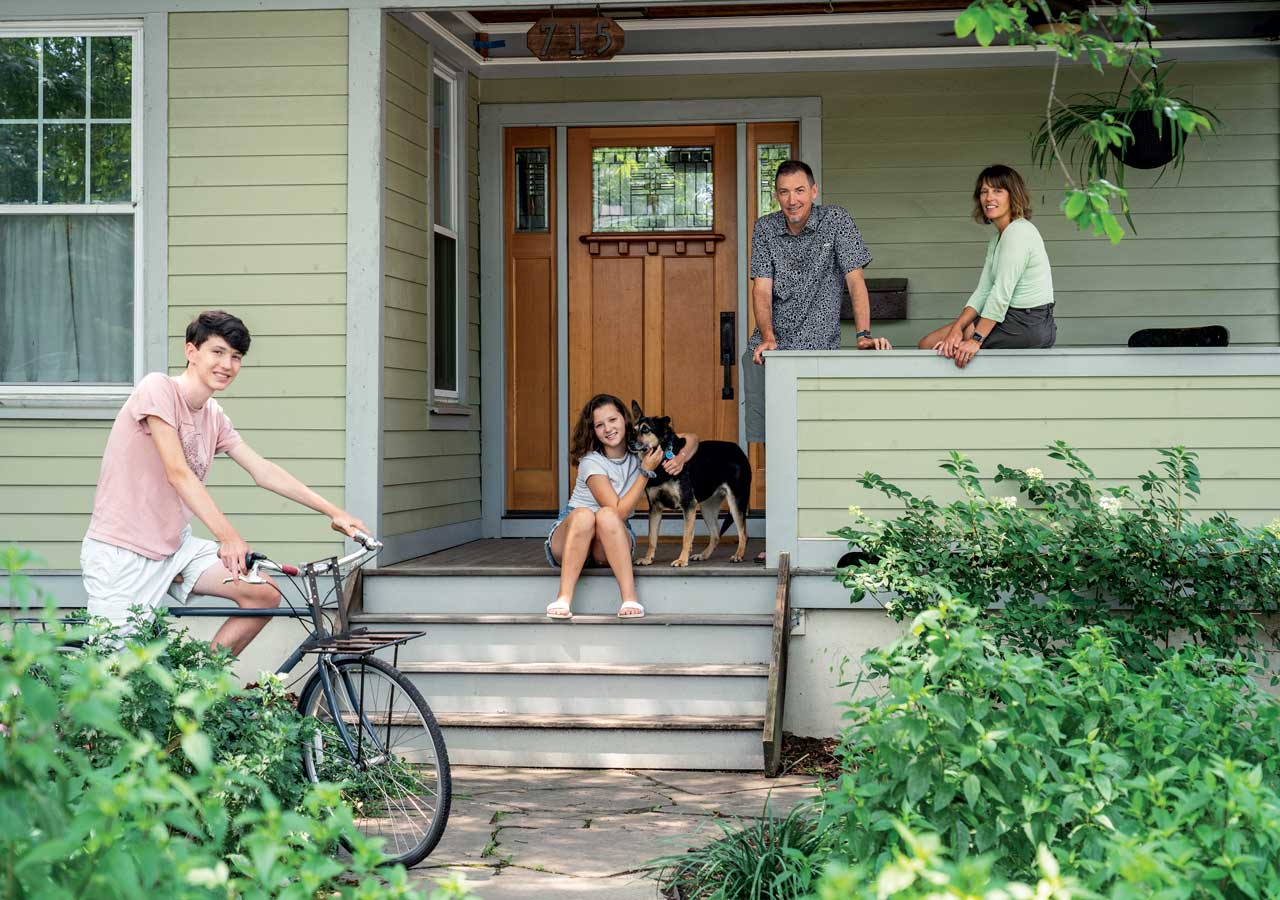
The Mann family lives in Aurora Hills. Their household represents four different Arlington schools. Mom Joanne is a sixth-grade reading teacher at Thomas Jefferson Middle School. Her husband, Chris, teaches math at Dorothy Hamm Middle School. Their son, Edwin, 15, is going into 10th grade at Wakefield High School, and their daughter, Maxine, 13, is a rising eighth-grader at Gunston Middle School.
Joanne: “The motivation piece has been the hardest. If kids in middle school are going to be open to learning, what comes first is emotional buy-in, the connection and relationships—even more so for kids who struggle a little bit with the skills. As a teacher, it’s been hard to keep kids coming back to engage online. Even if the materials are well organized, it’s a challenge for students to sift through and prioritize what should be done. These kids are having to build executive functioning skills overnight. It was like suddenly taking off the training wheels and saying, ‘Now you do it!’
“Thankfully, the pandemic didn’t hit earlier in the year. At least we were able to build trust with our students by the time we had to send them off on their own. Next year it’s going to be tough to build relationships with them through the screen. And then there’s the equity piece in terms of access. Going live requires high-speed internet. Imagine households with multiple kids needing to access live lessons at the same time, while parents continue to work from home. Parents are clamoring for live learning for their kids so they can have a regular schedule, but that’s a big issue that needs to be addressed before it’s equitable.
“For kids, peers are the most important thing in their lives. They’re not going to go ask a question that they think is stupid, and it’s much harder for teachers to see questions in their face and body language through a screen. The social-emotional component—where kids learn how to listen to each other, talk to each other, take risks, have an open mind—we’re going to have some catching up to do for sure.
“APS is doing the best they can, having been blindsided. Equity is a huge focus. Going to live learning, like private schools can do, would mean leaving so many kids behind. On my middle school team, we’re keeping track of each kid and their level of engagement in each of their core subjects. If we notice that there’s a kid who’s had little to no engagement for two weeks in a row, we’ll send them an email or give them a call. But some families have so much stress—health problems, unemployment—that keeping up with schoolwork is just too much. It’s so upsetting not to be with these kids. It’s really hard.”
Adrienne Wichard-Edds is an Arlington mom and writer specializing in parenting and education. She’s also a college mentor and essay coach. Find her online at @WichardEdds and theessaycoaches.com.