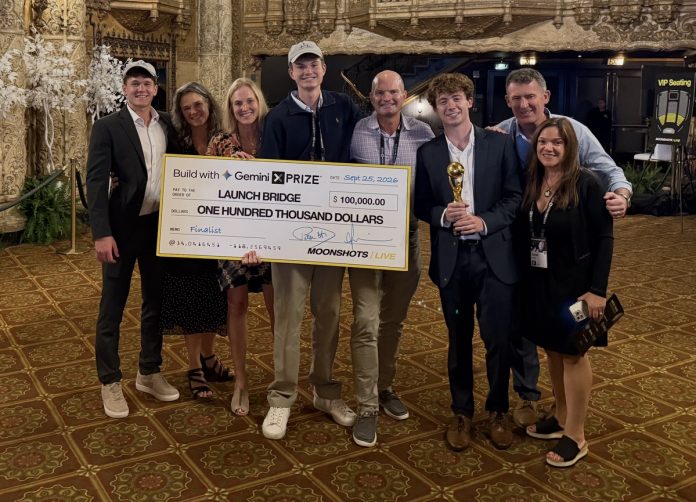
Three Arlingtonian teens wanted to help entrepreneurs launch small businesses. There was one catch, though. First they had to create their own small business.
Chase Rosen, Leo Fall and Carter Eckle were angling to enter the Gemini XPrize competition, in which entrants from around the world have 90 days to build artificial intelligence-powered businesses. Their goal: Use AI to simplify the startup process for budding business owners.
The trio named the solution LaunchBridge.ai, and on Sept. 25, they won fourth place out of more than 20,000 submissions. They were the only U.S. team in the top five, taking home $100,000 to grow and expand the business.

Launch Bridge handles some of the necessary administrative aspects of getting a new venture off the ground. Users sign on, and within 72 hours the platform registers their business as a Virginia-based limited liability company (LLC), applies for an Internal Revenue Service-assigned Employer Identification Number (EIN) and creates a basic website.
These fundamentals “can be really tedious, especially if you’re wanting to start your business immediately, and you want to get to selling right away,” says Fall, a 21-year-old junior at Virginia Tech, majoring in computer engineering. “What our business does is it gives you that option just to start it immediately. That’s something that we would have paid for, too, if we weren’t starting this ourselves.”
How It Began
In June, the trio began researching their own proof of concept, calling various small business owners to ask whether they would have found this type of service helpful when they got started, says Rosen, 20, a business major at the University of Virginia.
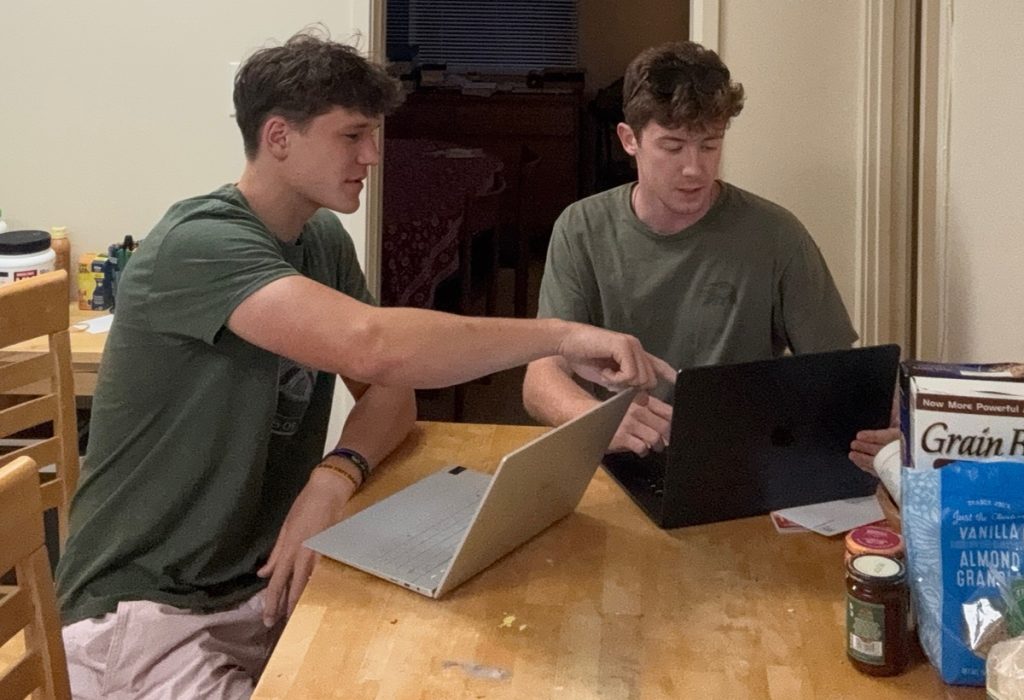
“After surveying all those small-business owners in Virginia and understanding what it takes to start a business, we came to the idea of ‘Wow, this is actually a very difficult process’—dealing with all the paperwork and spending weeks, if not months, filing for all your registrations and everything,” Rosen says. “It was satisfying to see how quickly we were able to come together on that problem and try our best to make a product that would help as many people as possible.”
They tapped Eckle’s father, Bryan Eckle, as their mentor. In 2024, the elder Eckle had founded Jupiter Peak, a platform that helps founder-led and private equity-backed companies improve their operations with AI. This, after 22 years as the founder and chief executive of Summit2Sea Consulting, which helped businesses maximize performance through technology investment.
“There’s been a trend in more people creating their own businesses, and I think that trend is going to continue,” Bryan Eckle says. “I think one of the greatest things AI can do is help you take an idea you have and turn it into reality.”
How It’s Going
To build the business, the three friends divvied up the work. Rosen opened a bank account and registered the LLC and EIN. Carter Eckle built the website, and Fall handled the AI coding. The site went live July 10, creating what the team hopes will become a bridge for entrepreneurs aiming to turn their business dreams into reality.
Starting a business with Launch Bridge takes three steps. First, customers share their idea, name preferences and location. (“It takes minutes, not meetings,” the site states.) Next, the AI model handles the EIN, branding, website creation and payment processing abilities.
“It gives you email notifications of what step it’s on in the process,” Fall says.
A human team member reviews each small business plan before sending the start-up package to the entrepreneur for approval. Finally, the business launches, “ready to take customers and accept payments from day one,” the site states.
“The only thing you have to go in and do is connect your bank [for invoicing and payments]. We don’t want to host any of that information on our side,” Fall says.
For added security, Launch Bridge encrypts clients’ data and does not sell it.
“You can contact us any point in the process or after if you want any changes or updates,” Fall says. “We’re more than glad to help you, especially if you want an easy fix on your website.”
The service, which costs a flat $350, has already attracted clients. The team helped one local woman start a Pilates business, and is now working with another entrepreneur who needs only a website and brand kit.
Future Finessing
The Gemini XPrize competition judging period kicked off Aug. 17. For a shot at some of the $2 million prize money, the Launch Bridge team had to show evidence of revenue, demonstrate how the AI works and answer a series of questions about the business, Rosen says.
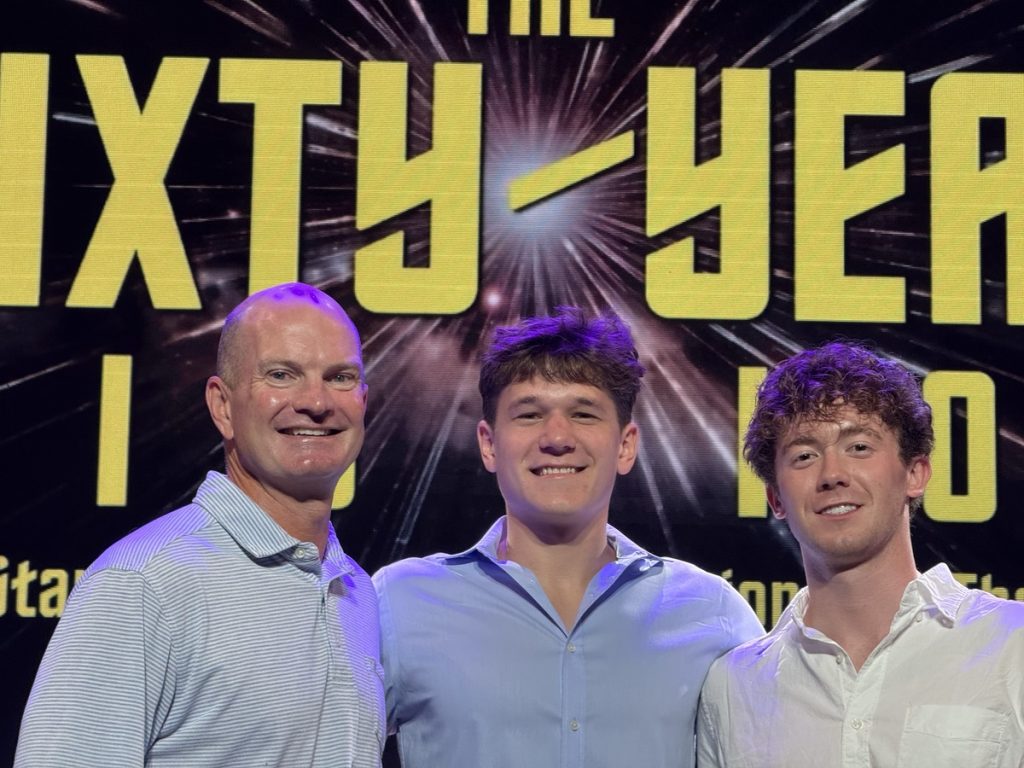
With the prize money, Fall says, the team plans to expand Launch Bridge. They’re currently targeting Virginia startups, but they ultimately aim to broaden their services and to accommodate entrepreneurs in other states.
“If you just want the website, or if you just want the LLC or EIN—if you already done some of the process and you just need our help for a small portion, you don’t have to pay for the whole package,” Fall says. “We also would like to expand [our web design services]. Right now, they’re just simple websites, but in the future, we could use more AI tools to improve our websites for the users and add certain features that they might want to see.”
One idea they’re considering is connecting budding business owners with a lawyer. Currently, Launch Bridge uses a registered agent, Arlington attorney Chris Shiplett, as its designated point person to manage legal notices and correspondence on the company’s behalf.
Learning By Doing
The three friends say dedicating their summer break to Launch Bridge was worthwhile.
“I’ve always been interested in AI as a tool,” says Rosen, who graduated from Washington-Liberty High School in 2024. But “AI is pretty taboo in university and high school. We used it as a tool for studying, but that’s pretty much it. This really opened our eyes to how powerful it actually is.”
Fall says he’s grateful to have gotten a crash course in the technology. “I don’t often get too much opportunity in school to use AI on projects,” he says. Building Launch Bridge “taught me a lot about how AI works in the real world. It’s not straightforward. It’s not some easy thing. But once you learn it, it’s a tool you can use forever on any project you need, and it makes it so much easier.”
Eckle sees AI as an essential tool for the 21st century. “It’s growing stronger and stronger,” he says. “It’s definitely going to be incorporated more into businesses in the world. We’re trying to get a head start on that.”
Mentor Bryan Eckle says it’s been exciting to watch the three friends evolve into business partners.
“College teaches you a lot. High school teaches you a lot. But actually doing things and building things, you learn at another level,” he says. “I think they’ve learned skills that they’re going to take and do even better things with into the future.”