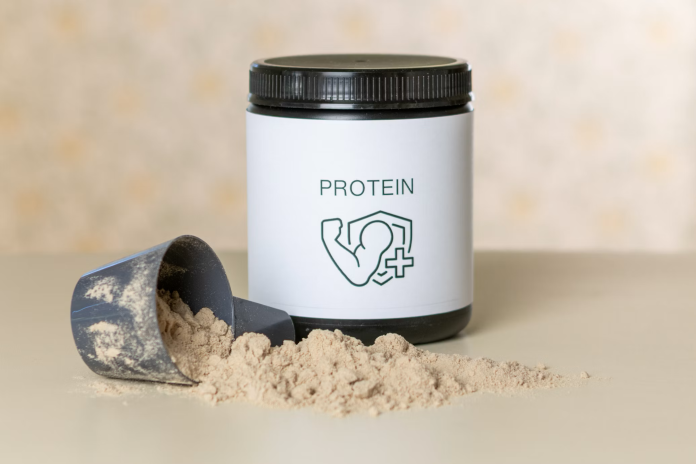
Protein is in high demand, popping up in everything from coffee to popcorn and even soda.
The newfound obsession with this essential nutrient comes partly from the revised, protein-prioritizing food pyramid that the U.S. Department of Agriculture published in January. Add to that the legions of online influencers with rippling abs promising looksmaxxing results from, well, protein-maxing. After all, the body uses protein to repair tissues, build muscle and bone, and maintain satiety between meals.
But is there a limit to how much protein consumption is healthy? Christopher Walsh, an internist at the Shirlington location of VHC Health Primary Care, urges caution. That’s because animal meat is one of the most common sources of protein, and when the body breaks it down, it takes what it needs. The excess can cause trouble.
Two conditions he’s seeing more of these days are gout and kidney stones. Gout is a form of arthritis caused by a buildup of uric acid in the blood. The body makes uric acid by breaking down purines—chemical compounds found in most foods but especially meat. Eating too much animal protein also increases the potential for developing kidney stones, hard objects made of minerals and salt in the urine.
We spoke with Walsh about the pros and cons of the protein craze. This interview has been lightly edited for length and clarity.
Why is protein having a moment?
I think it’s probably two-fold. One is this change in USDA guidance, and then also the idea that we have become very aware of the simple carbs and processed foods in the American diet and a shift to cleaner, healthier living. In certain groups, that has turned to a high-protein diet. There’s a cultural component to this, too. I think the reasons people are paying attention to their diet might be different based on age: longevity vs. looks. Younger guys on social media are seeing images of individuals who dedicate their lives to how they look. That is distorting what normal and healthy looks like. In older individuals, there’s a push for protein supporting longevity and improvements from a cognitive standpoint, less risk of fracture for women who are postmenopausal, a cardiovascular benefit to having strength and muscle mass.
How much protein do we need?
The national guidelines come out every five years. In 2020-2025, we talked about 0.8 grams per kilogram body weight, so for an average-size individual who weighed 150 pounds, that’s 54 grams of protein per day. In the 2025-2030 guideline, the amount of protein recommended doubled, and so the daily recommendation is now 1.2 to 1.6 grams of protein per kilogram.
Is there such thing as too much protein?
Anything done in excess always poses risks. It’s not necessarily wrong. It’s just posing a risk. In the average individual, more protein isn’t always better if your body’s getting what it needs to support muscle growth and muscle repair. The excess doesn’t just get stuck onto muscles like Legos. As that excess gets broken down, problems can arise.
Does anyone need extra protein?
People who are doing a heavy amount of exercise—cyclists, runners, weightlifters—many of them were increasing their protein amounts to the 1 gram to 1.5 gram per kilogram amount anyway because there is a theory that if you’re building more muscle mass, you need more protein to be able to build that muscle mass. A risk for most women is in bone and muscle health, osteoporosis and fracture. We know that muscle and bone strength require a certain amount of nutrients—calcium and vitamin D from a bone health standpoint, protein from a muscle standpoint—and exercise to put stress on those muscles and bones to keep them strong. (Menopausal women should aim for 1.0 to 1.2 grams of protein per kilogram of body weight per day, according to the Mayo Clinic.)
Do people taking GLP-1 medications need more protein?
Patients on the GLP-1 drugs are advised to maintain adequate protein intake. These medications reduce appetite and result in changes in metabolism. While the goal of these medications is to reduce body fat and to result in weight loss, we do not want this occur at the expense of skeletal mass (muscle and bone). Patients on GLP-1 drugs should be advised to stay well hydrated, to increase fiber (which counteracts some of the constipation side effects often reported) and to maintain adequate to slightly higher levels of protein intake, combined with routine strength training and aerobic activity, to maintain muscle mass and skeletal health.
What are good sources of protein?
Not all proteins created equal. Think about tofu vs. a hamburger. Healthy proteins, to me, come from plants, so nuts and beans. Also eggs and poultry, fish and seafood. There is some concern about getting all of your protein from red meat. The American Heart Association and the American Cancer Society have pointed out that diets that are high in red meat, particularly processed meats, pose an increased risk for heart disease and cancer. And then think about how you’re cooking your proteins. If you get a beautiful piece of salmon and you cover it with butter and cheese, it’s no longer as healthy as your broiled salmon with some herbs and vegetables.
What about protein supplements?
Concentrated supplements are your powders, your bars, your shakes. The challenge with a lot of those is, in order to taste good, sometimes they add a lot of sugar. Is it worth it to take in 200 calories of sugar in order to get 10 grams of protein, or should you just have a scrambled egg? The other thing about supplements is that many of them, particularly ones that you buy online, aren’t well regulated and contain a whole lot of other stuff besides protein. Many of them contain stimulants like caffeine. People who have heart arrhythmias and high blood pressure, they don’t necessarily want or need stimulants or caffeine in their protein supplements. Look at the ingredients.
If you’re looking for something easy, creatine and whey protein are single-ingredient supplements. Instagram reels are talking about creatine helping from a memory and cognitive standpoint, and interestingly, there’s science behind that. A study that came out in July 2024 essentially showed that in older individuals who take a creatine supplement, there is an improvement in memory and attention, and what we call processing speed, the ability to computationally do certain activities.
How do you know if you’re consuming too much protein?
If something doesn’t feel right, heed your body. If you are finding that you’re eating an X-shaped diet (as opposed to a pyramid), and you’re more lethargic, constipated or having heartburn, listen to your body. Think about what you’ve added in or subtracted out. Seek medical care if something is really significant or persistent.
What kind of diet do you recommend?
I recommend a balanced diet. I’m a believer in moderation. I understand that people want higher-protein diets, they want lower-calorie diets. There are many who are looking to lose weight, either with or without some of the weight loss medicines that exist, but I try to push people toward balance. Balance in the long term beats extremes in almost every category from a health standpoint. A good, balanced diet can support fitness goals, it can support weight loss goals without necessarily overtaxing the body.